Thursday, March 20, 2014

Parks and Conservation Ares

By Liliana Usvat

Blog 162 -365

Wetlands control flooding, reduce erosion, purify our water and provide food and homes for fish, birds and wildlife.

Here are some wild life that you can see in Ontario while walking at a small distance from populated areas.


 Trumpet Swan
 Their breeding habitat is large shallow ponds, undisturbed lakes, pristine wetlands and wide slow rivers, and marshes in northwestern and central North America, with the largest numbers of breeding pairs found in Alaska. They come in the summer close to my house.

They prefer nesting sites with enough space for them to have enough surface water for them to take off, as well as accessible food, shallow, unpolluted water, and little or no human disturbance.
The Trumpeter Swan is the largest extant species of waterfowl. Adults usually measure 138–165 cm (54–65 in) long, though large males can range up to 180 cm (71 in) or more. 


Great Blue Heron
The Great Blue Heron (Ardea herodias) is a large wading bird in the heron family Ardeidae, common near the shores of open water and in wetlands over most of North America.

Notable features of Great Blue Herons include slaty flight feathers, red-brown thighs, and a paired red-brown and black stripe up the flanks; the neck is rusty-gray, with black and white streaking down the front; the head is paler, with a nearly white face, and a pair of black plumes running from just above the eye to the back of the head. 

The primary food for Great Blue Heron is small fish, though it is also known to opportunistically feed on a wide range of shrimp, crabs, aquatic insects, rodents and other small mammals, amphibians, reptiles, and small birds. Primary prey is variable based on availability and abundance.

This species usually breeds in colonies, in trees close to lakes or other wetlands. Adults generally return to the colony site after winter from December (in warmer climes such as California and Florida) to March (in cooler areas such as Canada). Usually colonies include only Great Blue Herons though sometimes they nest alongside other species of herons.
 Canadian Goose

The ubiquitous Canada goose is one of the best known birds in North America. It is found in every contiguous U.S. state and Canadian province at one time of the year or another. Canada geese are adaptable to many habitats.
 Trumpet Swan - this bird is at Makenzie Marsh in Aurora Ontario Canada.
Two years ago there were 2 birds last year 2013 we were visited by 5 birds. There is a real show to see them on the lake people are coming and taking picture of them the kids are watching and sometime feeding them with bread.

These birds feed while swimming, sometimes up-ending or dabbling to reach submerged food. The diet is almost entirely aquatic plants. They will eat both the leaves and stems of submerged and emergent vegetation. They will also dig into muddy substrate underwater to extract roots and tubers. In winter, they may also eat grasses and grains in fields.

In the 19th and early 20th centuries, the Trumpeter Swan was hunted heavily, both as game and a source of feathers. This species is also unusually sensitive to lead poisoning while young. These birds once bred in North America from northwestern Indiana west to Oregon in the U.S., and in Canada from James Bay to the Yukon, and they migrated as far south as Texas and southern California. The trumpeter was rare or extinct in most of the United States by the early twentieth century. Many thousands survived in the core range in Canada and Alaska, however, where populations have since rebounded.
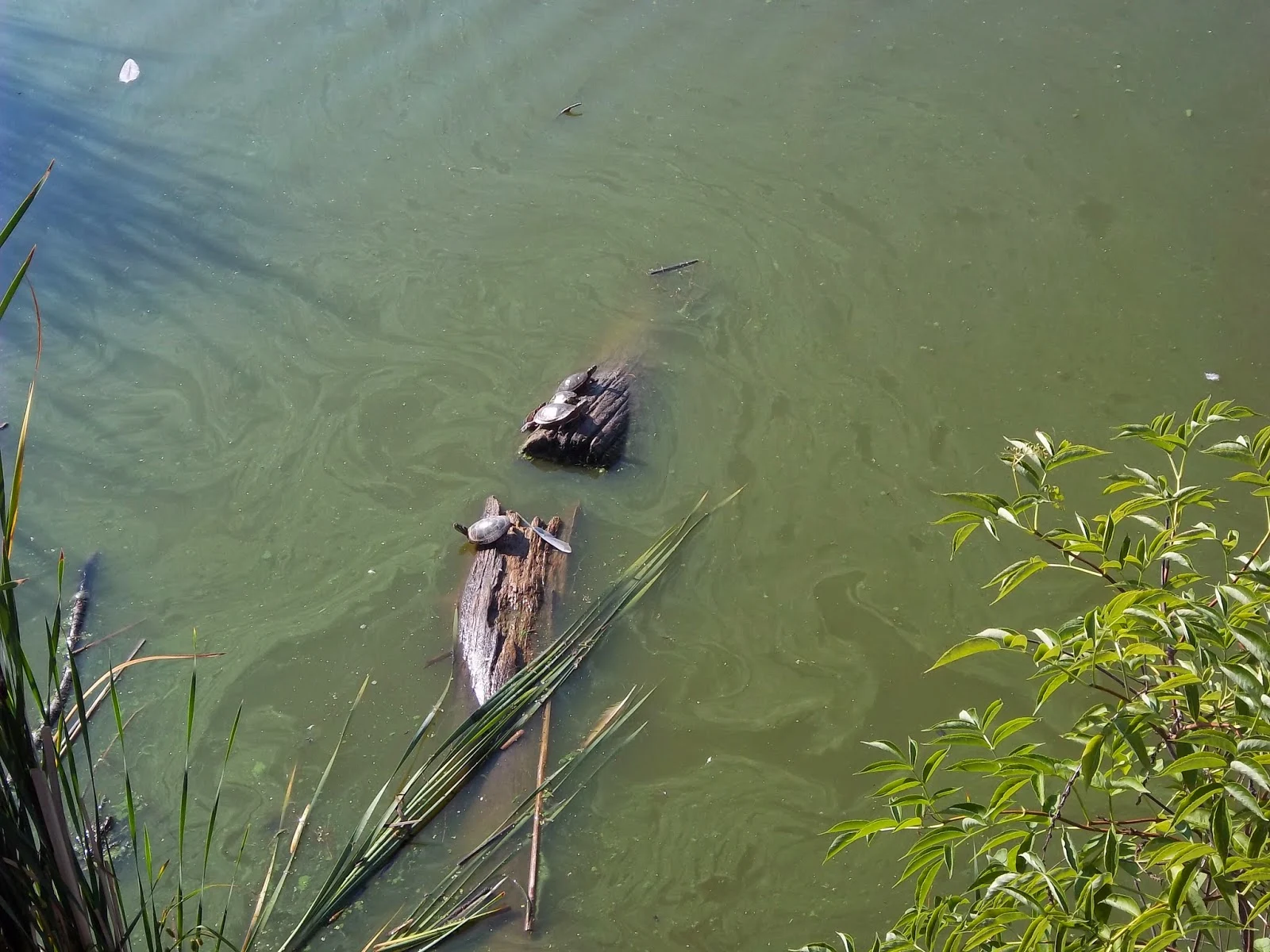
 Turtles - these are small turtles that are taking a sun bath. They allow people to take picture of them. When scared they hide in the water.
 Ducks
 Turtle and ducks


Beaver The beaver (genus Castor) is a primarily nocturnal, large, semi-aquatic rodent. They are the second-largest rodent in the world.Beavers are known for their natural trait of building dams on rivers and streams, and building their homes (known as "lodges") in the resulting pond.

The above pictures were taken in 30 minutes at noon. The Park restoration projects in Ontario created a healthy environment for these wild birds and animals to live in the proximity of the populated areas. The existence of them show that the water is clean and the air is not polluted. A lot of people take picture of these birds and animals while taking a walk in Aurora Ontario Canada.

Provincial parks and conservation reserves support the economy by boosting tourism. They are also important for scientific research, environmental monitoring and outdoor education.  Most importantly, they ensure that future generations will enjoy and benefit from the province’s rich natural and cultural heritage.

Wednesday, March 19, 2014

Liliana Usvat: Slippery Elm has Been Used as Herbal Remedy by Native Americans

Liliana Usvat: Slippery Elm has Been Used as Herbal Remedy by Native Americans

Slippery Elm has Been Used as Herbal Remedy by Native Americans

By Liliana Usvat
Blog 161 -365


The slippery elm is native to eastern Canada and the eastern and central United States where it is found mostly in the Appalachian Mountains. Its name refers to the slippery consistency the inner bark assumes when it is chewed or mixed with water. Slippery elm inner bark has been used historically as a demulcent, emollient, nutritive, astringent, anti-tussive, and vulnerary. It is included as one of four primary ingredients in the herbal cancer remedy, Essiac, and in a number of Essiac-like products such as Flor-Essence.

Elms are deciduous and semi-deciduous trees comprising the genus Ulmus in the plant family Ulmaceae. The genus first appeared in the Miocene geological period about 20 million years ago, originating in what is now central Asia.
 
During the 18th and 19th centuries, elm cultivars enjoyed much popularity as ornamentals in Europe by virtue of their rapid growth and variety of foliage and forms

Viticulture


The Romans, and more recently the Italians, used to plant elms in vineyards as supports for vines. Lopped at three metres, the elms' quick growth, twiggy lateral branches, light shade and root-suckering made them ideal trees for this purpose.
 
Ovid in his Amores characterizes the elm as "loving the vine": ulmus amat vitem, vitis non deserit ulmum (:the elm loves the vine, the vine does not desert the elm) and the ancients spoke of the "marriage" between elm and vine.

Medicinal products

Slippery Elm has been used for centuries as an herbal remedy by Native Americans. The inner bark of the slippery elm tree is used medicinally, both internally and topically. Internally, it has been used to treat sore throats and diarrhea, and externally, slippery elm has been used to treat various inflammatory skin problems like wounds, boils, ulcers, and burns.
 
The mucilaginous inner bark of the Slippery Elm Ulmus rubra has long been used as a demulcent.

A demulcent (derived from the Latin: demulcere "caress") is an agent that forms a soothing film over a mucous membrane, relieving minor pain and inflammation of the membrane. Demulcents are sometimes referred to as mucoprotective agents. Demulcents such as pectin, glycerin, honey, and syrup are common ingredients in cough mixtures. These demulcents will coat the throat and relieve the irritation causing the cough. They can be used to treat any type of cough, but are particularly useful to treat dry coughs. Some demulcents may not be suitable for diabetics as they are based on sugar
 
Slippery elm is a tree. The inner bark (not the whole bark) is used as medicine.

People take slippery elm for coughs, sore throat, colic, diarrhea, constipation, hemorrhoids, irritable bowel syndrome (IBS), bladder and urinary tract infections, syphilis, herpes, and for expelling tapeworms. It is also used for protecting against stomach and duodenal ulcers, for colitis, diverticulitis, GI inflammation, and too much stomach acid. Slippery elm is also taken by mouth to cause an abortion.

Slippery elm is applied to the skin for wounds, burns, gout, rheumatism, cold sores, boils, abscesses, ulcers, toothaches, sore throat, and as a lubricant to ease labor.

In manufacturing, slippery elm is used in some baby foods and adult nutritionals, and in some oral lozenges used for soothing throat pain.

The late Euell Gibbons recommended pouring a pint of boiling water over an ounce of the coarsely ground inner bark, allowing the mixture to cool, and then adding the juice of one-half lemon and enough honey to sweeten the brew to taste. Our pioneer forebears treated colds with such a "lemonade" and it was especially recommended for feverish patients.

The outer bark of the slippery elm is reddish brown, deeply furrowed, and quite rough. It can be harvested any time of the year but peels from the tree most easily in the spring (when the sap is running). The juicy inner bark may then be pulled from the outer with little difficulty. Spread the cambium bark out on newspapers in a warm, dry room. Once it has dried, it may be stored (in sealed glass jars) and ground for use as desired.

The generally advised dosage of slippery elm is to take between 4 and 10 grams of the dried inner bark in capsule form three to four times a day.  You can also make a tea by boiling teaspoons-full of loose bark in a cup of water for ten to fifteen minutes, cooled before drinking.  Three to four cups of this tea can be drunk per day.  To use externally, mix coarse powdered bark with boiling water to make a poultice. - See more at: http://happyherbcompany.com/slippery-elm#sthash.mLjRrNGH.dpuf

The generally advised dosage of slippery elm is to take between 4 and 10 grams of the dried inner bark in capsule form three to four times a day.  You can also make a tea by boiling teaspoons-full of loose bark in a cup of water for ten to fifteen minutes, cooled before drinking.  Three to four cups of this tea can be drunk per day.  To use externally, mix coarse powdered bark with boiling water to make a poultice. - See more at: http://happyherbcompany.com/slippery-elm#sthash.mLjRrNGH.dpuf

How does it work?

Slippery elm contains chemicals that can help soothe sore throats. It can also cause mucous secretion which might be helpful for stomach and intestinal problems.
 
 There are no known side effects or safety issues with this plant.

Barks can be harvested with very little damage to a tree, and can even improve the health of a tree, much as pruning does. The most ecological way to harvest bark is to prune smaller branches from the tree using pruning shears or a small pruning saw.  It doesn't take many branches to supply a house with all it is needed for a year.  If larger quantities are needed  might consider taking a whole sapling if the tree grows in abundance and is in a crowded stand already.

To remove the bark from the branches, use the hand pruners to snip off any side branches and spurs.    Then  take a sharp paring knife or pocketknife and peel the bark in thin strips or shavings, much like peeling a carrot.  Be sure to cut deeply enough to get the inner bark, which will be slightly wet and also is usually green in color.  The different layers are easy to distinguish when you are peeling the branches. 

To peel the barks is to lay the branch flat on your cutting surface, and then take the knife and hold it perpendicularly (right angle) to the branch.  Then with a strong scraping motion, scrape back and forth vigorously.  This shreds the bark while it peels it and results in very nice finished product, no further need for cutting.  The shredding breaks up the fibers nicely, which is very helpful when you make medicinal preparations later.

Food

When dried and ground into a coarse meal, the sweetly fragrant and creamy white or pinkish inner bark of the slippery elm can be boiled into a porridge that looks and tastes very much like oatmeal. And, surprisingly enough, modern nutritionists have discovered that, when so prepared, the bark does indeed possess a food value about equal to that of oatmeal.
 
Slippery elm's inner bark, on the other hand, does have its other uses too. When ground to a fine powder, it makes a good extender for ordinary flour and can be included that way in a wide variety of recipes. And back before today's sugar-laden treats were so widely available, small boys were fond of stripping off pieces of this cambium bark and chewing it. Such a "chaw" makes a sweet-flavored, long-lasting chewing gum that both satisfies thirst and supplies a certain amount of nourishment.

History

It is recorded that, during their bitter winter at Valley Forge, George Washington's ragtag Revolutionary War soldiers lived through one 12-day period on little more than slippery elm porridge. And no one, of course, knows how many starving pioneer families scraped through their first winters on the American continent thanks to the same survival rations.


Tuesday, March 18, 2014

Polylepis Forest in the Andes Mountains

by Liliana Usvat
Blog 160-365

The highest living tree in the world is magical in several ways. Used by Andean people since the days ot the Incas, the paper tree is truly unique.

Some are very stunted, but most polylepis trees grow 33 to 49 feet tall, sometimes reaching 148 feet at lower levels.


Polylepis forests are unique ecosystems harboring about 20 different plant species of what the locals call queñua, as well as numerous insect and bird specialists living only in these forests. Once thought to be patchy by nature, Polylepis forests are now recognized to be highly endangered. 

In Inca times, Polylepis woodlands were strictly protected

The Polylepis forest is located in the Andes Mountains. Polylepis forests occur at altitudes of up to 4,500 meters in sheltered areas. Most of the original forest is in the cold Western Cordillera of Bolivia. There is only ten percent left of the original forest.

There are over 15 million trees in just the Andean zone. The exotic plants have grown close to the Polylepis forest causing shading of the native trees. In the Polylepis forest there are 20 evergreen tree species that are characterized by gnarled shapes. The trees have a thick and dense laminated bark with small green and gray leaves. Loss of high mountain forests is considered the major cause of water scarcity in many parts of the Andes. A lot of forest birds live in the Polylepis forest. The Polylepis forest is a very bright colored forest.

Polylepis is a group of tree species belonging to the rose family. Fifteen species of the Polylepis genus grow in South America, from northern Venezuela to northern Chile and Argentina. The highest number of species grow in Ecuador, Peru and Bolivia.

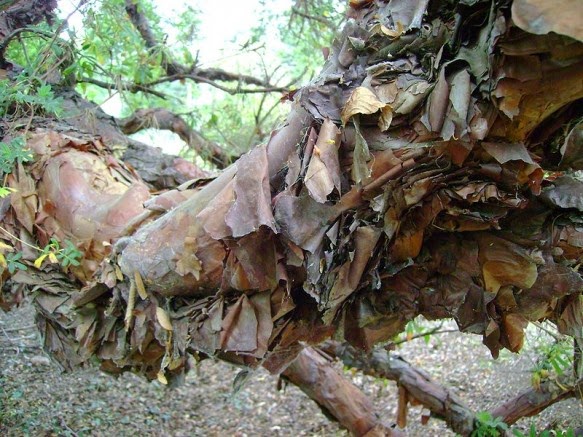
The forest has to adapt to the unstable water supply. Birds had to adapt to the small range sizes. The Peruvian Polylepis forests contain three of South America's endangered birds. Great colored parrots and toucans live in the forests, as does the Royal Cinclodes. The forests are vegetated with little-leafed plants. Polylepis trees are evergreens, so they begin photosynthesis as soon as the weather gets warmer. The small leaves prevent water loss (cold, dry conditions). The thick, red peeling bark on the trees protects them from animals and fire damage.


The largest stand of polylepis in Ecuador is contained within the highland portion of the Cayambe-Coca Biological Reserve, and estimated to be several thousand years old.


The name polylepis means “many scales” in Latin, correctly describing the papery, layered bark that characterizes this tree type.

The Andean people use the Polylepis forest for many reasons. Fifty-six percent of the forest is used for medicines. Twelve percent is used for human food. And nine percent is used for construction and ritual purposes. Over all about thirty-five percent of the most useful plant species are only found inside the forest. The animals, like the birds use the forest for food.


Mountain forest ecosystems have drastically changed due to human disruption such as cutting, burning and grazing, which causes fragmentation of the forest landscape. Polylepis contains some unique forms of autoecological (population ecology) and synecological relationships. Since they are located at high altitudes, they are equipped with specializations that help them withstand the harsh conditions
 
The Tropical Polylepis woodlands are highly endangered. The forests began disappearing during the time of the Incas, when much of its wood was used for building material and firewood. After the conquistadors brought their sheep and cattle, more forests were lost to grazing. Today native peoples still use the wood for building and heat. Loss of the forests have caused landslides threatening villages and roads. Only 10% of Bolivia's original Western Cordillera

Polylepis forests remain. Only 1% of the forest survives in the Eastern Cordillera where eight out of nine of Bolivia's Polylepis species grow. Loss of the habitat is rapidly destroying one of Ecuador's most precious treasures: the natural diversity. There is a project going on to help the Polylepis forest. The project involves buying 400 acres of native Andean forest. By purchasing this land, they can replant it with Polylepis trees and stop water erosion.
 
Tree planting with Polylepis; 33,000 trees of Polylepis racemosa have been planted to join up fragments of existing woodland, and more than 70% were still alive 2-4 years after planting.


The legacy of Andean wisdom has opened the door to more questions than it has answered: Who were these people? Where did they come from? And, perhaps most important of all, what did they know in their time that may help us solve the personal, and global crises of living we face in ours?The answer to these and similar questions lies in unlocking the secrets they left behind—the secret of fast-growing, high yield and sustainable crops, the use of minerals, rare herbs and heart-based emotion for advanced healing of the body, the keys to 100-plus-year-long human life spans, and much more!

The Andes Mountains of Southern Peru is one of only 5 places in the world today with the highest concentrations of people living over 100 years of age!

 Ancient Andeans built sophisticated agricultural terraces that could optimize soil temperature by 5 degrees at a time to find the best conditions for their crops!

The new generation of children come with a deep understanding of care and respect for Earth (knowledge they definitely did not learn from us) … it is the message of Mother Earth (Pachamama for the Andean peoples), a very clear message. We must reconnect with Nature, we must remember the sacredness of our relationship with creation, as part of divine creation, part of Nature.
 
Come to the understanding that it was society and its powers that forced the separation of the human being from Nature, with principles based on selfishness and greed, which created concepts like ‘private property’ and borders!! And in the process nature was outlawed; how could nature dare to connect all plant, animal and mineral kingdoms in one planet!

The existence of a collective plant consciousness was denied; the existence of a divine vital force powering a harmonic life cycle for all animal life on the planet was ignored; and the truth of minerals on Earth, that despite not being able to breath like plants and animals, they are alive and are able to record energy, was hidden.

The Sacred Andean Tradition teaches and helps us to remember how simple it is to live in balance and harmony. We learn to integrate creation (Nature) in all dimensional aspects and realities (that what we call real and that what we call virtual reality), always in spiral evolution, always in a dynamic way, always in reciprocity, always in unconditional love, always respecting all life, always in Unity. 

About Forests Logging Practices as "Investments"

I received yesterday an unsolicited e-mail regarding investing. The e-mail solicited money to invest in logging companies that operate in Brazilian Forest. Who allow these people to cut forests in foreign lands so that a person in another country to make a profit of $8-16 as they advertised. It is moral?

Would you want to have a person from a foreign country to come to your backyard to cut the trees that provide you with oxygen, rain, soil, shade? Why are these practice are allowed? Are forests in other countries less valuable that one your country?
In the process, our globalised human race is depleting the recourses, is destroying the land, is polluting the waters, is destabilising the ecosystems, in other words, is hurting the planet.
We have reached the point where our ‘advanced technology’ is going to obliterate the humanity that produced it in the first place! What are we leaving for the next generations? Should we just resign ourselves to destroy our world civilisation and hope for the re-birth of another human civilisation some day? Haven’t we learnt anything from past civilisations?
 

Monday, March 17, 2014

Forsythia and Traditional Chinese Medicine

Liliana Usvat
Blog 159-365


Common Names - Forsythia , golden bells , lian qiao , weeping forsythia.

It is in flower from March to April. The flowers are hermaphrodite (have both male and female organs) and are pollinated by insects. It can grow in full shade (deep woodland), semi-shade (light woodland) or no shade. It requires moist soil.
 
Forsythias are popular early spring flowering shrubs in gardens and parks. Two are commonly cultivated for ornament, Forsythia × intermedia and Forsythia suspensa. They are both spring flowering shrubs, with yellow flowers. They are grown and prized for being tough, reliable garden plants. Forsythia × intermedia is the more commonly grown, is smaller, has an upright habit, and produces strongly coloured flowers. 
 
It is a flowering shrub producing yellow gold-like flowers. Growing up to 10 feet high, this shrub has a fountain-like beautiful look making it ideal for your garden. Lighting requirements of this shrub include either full sun or light shade and as far as soil is concerned, it should be well-drained and have additional water.

There are about 11 species, mostly native to eastern Asia, but one native to southeastern Europe. The common name is also forsythia; the genus is named after William Forsyth.

Forsythia viridissma, meanwhile, had overtaken it in European gardens. The Scottish plant-hunter Robert Fortune "discovered" it— in a mandarin's garden of the coastal city of Chusan (Zhoushan)— before he ever saw it growing wild in the mountains in Chusan's province, Zhejiang.

Propagation

Commercial propagation is usually by cuttings, taken from green wood after flowering in late spring to early summer; alternatively, cuttings may be taken between November and February. Low hanging boughs often take root, and can be removed for transplanting. A common practice is to place a weight over a branch to keep it on the ground, and after it has rooted, to dig up the roots and cut the rooted part from the main branch, this can then be planted.

Medicinal Uses - Traditional Chinese Medicine
 
The flowers have a broad-spectrum antibacterial action, inhibiting the growth of Staphococcus aureus, Shigella dysenteriae, haemolytic streptococcus, pneumococcus, Bacillus typhi, Mycobacterium tuberculi etc.

The leaves are febrifuge and are also poulticed onto ulcerated glands and haemorrhoids. A decoction of the leaves and twigs is used in the treatment of breast cancer.

The root is used in the treatment of cancer, colds, fever and jaundice.
 
It has been documented that the ancients in China ground up the fruit and gave it to the gravely ill to treat symptoms of fever and chest pain.

 Forsythia, known as lian qiao in China, is classified as bitter and cold, and is associated with the heart, lung, and gall bladder meridians. Practitioners prescribe it as a blood detoxifier, and for fevers, headaches and viral infections. Traditional Chinese Medicine recommends the green fruit, which is steamed and dried for medicinal use. Forsythia is often combined with honeysuckle (Lonicera japonica) in remedies.

Forsythia fruits are also reputedly used as a diuretic and as a cardiovascular tonic.
 
Antiviral forsythia, honeysuckle, and lemon balm (Melissa officinalis) share proven antiviral compounds. Prepare a tea from all three herbs for viral infections such as cold and flu. The tea is most effective when taken at the first sign of a viral infection.

Bronchitis In China, forsythia is a respected remedy for chest ailments such as bronchitis.

Antibiotic Chinese practitioners recommend forsythia as an antiseptic antibiotic. Its antibiotic properties make it a popular remedy in China for ear infection. It is recommended  forsythia for earache relief. Although the powdered herb is effective as a tea,  it can be sprinkled on applesauce when given to children.
 
Prepare a decoction by adding the powdered fruit to boiling water. Do not take more than 6 to 15 grams of forsythia daily.

In China, the fruit has been most often combined with flowers of the honeysuckle, and it still is one of the most-used herbal formulas there to treat colds, allergies and flu symptoms.

It has been documented by Chinese herbalists for 3,000 years to be helpful as a detoxicant to treat what they called toxic or hot conditions. These are better known to us as inflammatory and infectious diseases that include viral and bacterial infections, including cold and flu.

It appears that the plant enhanced the levels of good cholesterol in the body while also helping in lowering the bad cholesterol. 


Friday, March 14, 2014

Liliana Usvat: Byble Plants - Lebanon Cedars - History, Symbolysm, Medicinal Uses

Liliana Usvat: Byble Plants - Lebanon Cedars - History, Symbolysm, Medicinal Uses

Byble Plants - Lebanon Cedars - History, Symbolysm, Medicinal Uses

by Liliana Usvat
Blog158-365

Cedrus libani (Lebanon Cedar)  

Cedrus libani is a species of cedar native to the mountains of the Mediterranean region. Lebanon cedar or Cedar of Lebanon (Cedrus libani subsp. libani or var. libani) - grows in Lebanon, Palestine, northwest Jordan, western Syria, and south central Turkey.

History, Symbolism and Medicinal Uses


The Cedar of Lebanon was important to various ancient civilizations. The trees were used by the Phoenicians for building commercial and military ships, as well as houses, palaces, and temples. The ancient Egyptians used its resin in mummification, and its sawdust has been found in the tombs of Egyptian Pharaohs. The Sumerian Epic of Gilgamesh designates the cedar groves of Lebanon as the dwelling of the gods to which Gilgamesh, the hero, ventured.
 
Hebrew priests were ordered by Moses to use the bark of the Lebanon Cedar in circumcision and the treatment of leprosy.

According to the Talmud, Jews once burned Lebanese cedar wood on the Mount of Olives to celebrate the new year.

Because of its significance the word Cedar is mentioned 75 times (Cedar 51 times, Cedars 24 times) in the Bible.

Beyond that, it was also used by Romans, Greeks, Persians, Assyrians and Babylonians.

Medicinal Uses

Part Used Young Shoots
Plant Stem Cell Therapy  - Cedrus libani are widely used as traditional medicine in Lebanon for treatment of different infection diseases.
  • Himachalol from Cedrus Libani has shown potent anti-allergic activity.
  • The decoction has been used in intermittent fevers, rheumatism, dropsy, coughs, scurvy, and as an emmenagogue. 
  • The leaves, made into an ointment with fat, are a helpful local application in rheumatism.
  •  An injection of the tincture into venereal warts is said to cause them to disappear.
  •  For violent pains the Canadians have used the cones, powdered, with four-fifths of Polypody, made into a poultice with lukewarm water or milk and applied to the body, with a cloth over the skin to prevent scorching. 
  • Dosage---Of fluid extract, 1/4 drachm, three to six times a day, as stimulating expectorant and diuretic. The infusion of 1 OZ. to a pint of boiling water is taken cold in tablespoonful doses.  
  • Inhale the steam of cedarwood essential oil to treat respiratory infections and clear congestion.
  •  Add a few drops to a sitz bath to ease the pain and irritation of urinary infections and to cure the infection more quickly.
  •  Applied to oily skin, cedarwood essential oil is an astringent that dries and helps clear acne. Incorporate it into a facial wash, spritzer, or other cosmetic (10 drops of essential oil per ounce of preparation). 
  • Added to a salve (15 drops of essential oil per ounce of salve), it relieves dermatitis and, in some cases, eczema and psoriasis. 
  • For bites and itching, mix cedarwood and an equal part of alcohol or vegetable oil, and dab directly on the area. Add two drops of essential oil to every ounce of shampoo or hair conditioner to ease dandruff and possibly slow hair loss. 
  • Anti-inflammatory, topical Insecticidal. Antiparasitic, Antibacterial, Anticandida, Scabies infections and to heal wounds in humans and domestic animals, both internally and externally. Himachalol from Cedrus Libani has shown potent anti-allergic activity. Dry Eczema - (dry white crusty skin) - Psoriasis, Pruritus, Hyper-Keratosis, chronic dermatitis, lichenoid dermatosis, Callosity, Diaper Rashes,
  •  Dermatitis Herpetiformis (in Celiac Disease), 
  • anti aging of the skin. Dry skin and Anti-Wrinkle. 
  • Also works on the Elastin and Collagen of the skin. Anti-furrow; Furrows are where there may be wrinkle lines complicated by the loss of subcutaneous fat and/or ligament support. Increases the ability of the skin &/or scalp to retain water. 
  • This is a Botox equivalent over a six month period excellent for dry skin. Hair loss, Dandruff, dry skin accompanied with acne. If Oily Acne then use Elm. 
  • Himachalol from Cedrus Libani has shown potent anti-allergic activity especially skin allergic reaction. Leaf and bread molds phycomycotic diseases. Topical Deet alternative 1, 15ml bottle diluted in 20 ounces of distilled water and put into a frosted plastic spray bottle and used as a natural Repellent of Ticks and Mosquitoes. Keep away from eyes also can be used on animals in place of Frontline toxic products.
  • 'A' Diabetes, inhibit amylase, excellent in acute and chronic pancreatitis.
  • A' Antitumor. Cytotoxicity against human epidermal carcinoma of the nasopharynx. Sesquiterpenes can also erase or deprogram miswritten codes in cellular memory (DNA). The root problem with a cancer cell is that it contains misinformation, and sesquiterpenes can delete that garbled information.
  • Tropical uses UTFor scabies use 1 drop on each affected area every 2 hour 4 to 6 times per day. Takes around 10 applications to be eradicated. Could potentially be a DEET replacement due to a “novel sesquiterpene Isolongifolenone” Repellent of Ticks and Mosquitoes.Combats hair loss alopecia areata. Cuts or wounds to disinfect and protect from infection.   
  • Musculoskeletal System: 'A' The Antispasmolytic activity was similar to that of papaverine as observed by the effect of himachalol on various isolated smooth muscles and several agonists.Fibromyalgia 
  • Infectious Diseases: 'A' Antiviral Herpes Simplex HSV1. Scabies, Molluscicidal activity. Antiviral, Antifungal, Expectorant, Lymphatic cleanser. 

Forestation
 
Is widely cultivated as an ornamental species in southern climates. Requires about 1000 mm of rain a year. They form open forests with a low undergrowth of grasses in their native habitat.  

Propagate from seed, sown as soon as it ripens. Difficult to propagate from cuttings, and does not like to be transplanted.

Over the centuries, extensive deforestation has occurred, with only small remnants of the original forests surviving. Deforestation has been particularly severe in Lebanon and on Cyprus; on Cyprus, only small trees up to 25 m (82 ft) tall survive, though Pliny the Elder recorded cedars 40 m (130 ft) tall there.

Extensive reforestation of cedar is carried out in the Mediterranean region, particularly Turkey, where over 50 million young cedars are being planted annually.

The Lebanese populations are also now expanding through a combination of replanting and protection of natural regeneration from browsing by goats, hunting, forest fires, and woodworms.

World Heritage Site

The Cedars of God Forest is one of the last vestiges of the extensive forests of the Cedars of Lebanon (Cedrus libani ) that thrived across Mount Lebanon in ancient times. Their timber was exploited by the Assyrians, Babylonians and Persians as well as the Phoenicians. The wood was prized by Egyptians for shipbuilding; the Ottoman Empire also used the cedars in railway construction.

Concern for the biblical "cedars of God" goes back to 1876, when the 102-hectare (250-acre) grove was surrounded by a high stone wall, paid for by Queen Victoria, to protect saplings from browsing by goats. Nevertheless during World War I, British troops used cedar to build railroads

In 1998, the Cedars of God were added to the UNESCO list of World Heritage Sites.

Current status
 
The forest is rigorously protected. It is possible to tour it escorted by an authorized guide. After a preliminary phase in which the land was cleared of detritus, the sick plants treated, and the ground fertilized, the "Committee of the Friends of the Cedar Forest" initiated a reforestation program in 1985. These efforts will only be appreciable in a few decades due to the slow growth of cedars. In these areas the winter offers incredible scenery, and the trees are covered with a blanket of snow.

Wednesday, March 12, 2014

Liliana Usvat: Tree of Heaven

Liliana Usvat: Tree of Heaven

Tree of Heaven

By Liliana Usvat
Blog 157 -365


Rhus chinensis, the Chinese sumac or nutgall tree, is a plant species in the genus Rhus. The species is used to produce galls, called Chinese gall,

Other scientific names: Ailanthus glandulosus, Ailanthus peregrina, Toxicodendron altissimum
French names: Ailante glanduleux, paradise-tree, and copal-tree

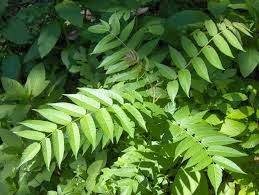
The tree of heaven is a rapidly growing deciduous tree with pale gray bark, light brown twigs and large pinnately compound leaves. It is native to China and was brought to the United States in the late 1700's as a horticultural specimen and shade tree. Its ease of establishment, rapid growth and absence of insect or disease problems made it popular when planning urban landscaping. - See more at: http://www.nature.org/ourinitiatives/regions/northamerica/unitedstates/indiana/journeywithnature/tree-of-heaven-1.xml#sthash.okMp5pBl.dpuf
The tree of heaven is a rapidly growing deciduous tree with pale gray bark, light brown twigs and large pinnately compound leaves. It is native to China and was brought to the United States in the late 1700's as a horticultural specimen and shade tree. Its ease of establishment, rapid growth and absence of insect or disease problems made it popular when planning urban landscaping. - See more at: http://www.nature.org/ourinitiatives/regions/northamerica/unitedstates/indiana/journeywithnature/tree-of-heaven-1.xml#sthash.okMp5pBl.dpu
The tree of heaven is a rapidly growing deciduous tree with pale gray bark, light brown twigs and large pinnately compound leaves. It is native to China and was brought to the United States in the late 1700's as a horticultural specimen and shade tree. Its ease of establishment, rapid growth and absence of insect or disease problems made it popular when planning urban landscaping. - See more at: http://www.nature.org/ourinitiatives/regions/northamerica/unitedstates/indiana/journeywithnature/tree-of-heaven-1.xml#sthash.okMp5pBl.dpuf
The species is used to produce galls, called Chinese gall. which are rich in gallotannins, a type of hydrolysable tannins.

Medicinal Uses

Nearly every part of the tree has some application in Chinese traditional medicine. One of the oldest recipes, recorded in a work from 732 AD, is used for treating mental illness. It involved chopped root material, young boys' urine and douchi. After sitting for a day the liquid was strained out and given to the patient over the course of several days.

Douchi  is a type of fermented and salted soybean. In English it is known simply as "black bean", and is also called fermented black soybeans, Chinese fermented black beans.

Another source from 684 AD, during the Tang dynasty and recorded in Li Shizhen's Compendium of Materia Medica, states that when the leaves are taken internally, they make one incoherent and sleepy, while when used externally they can be effectively used to treat boils, abscesses and itches. 

Yet another recipe recorded by Li uses the leaves to treat baldness. This formula calls for young leaves of ailanthus, catalpa and peach tree to be crushed together and the resulting liquid applied to the scalp to stimulate hair growth. 

The dried bark, however, is still an officinal drug and is listed in the modern Chinese materia medica as chun bai pi , meaning "white bark of spring" 
 
It is prepared by felling the tree in fall or spring, stripping the bark and then scraping off the hardest, outermost portion, which is then sun-dried, soaked in water, partially re-dried in a basket and finally cut into strips. The bark is said to have cooling and astringent properties and is primarily used to treat dysentery, intestinal hemorrhage, menorrhagia and spermatorrhea. It is only prescribed in amounts between 4 and 10 grams, so as not to poison the patients. 

A tincture of the root-bark has been used successfully in treating cardiac palpitation, asthma and epilepsy.  Tincture1:2 ratio of chopped bark to alcohol (70% strength), using more alcohol if the roots are dried first.

You can make your own folk medicine out of Tree of Heaven using the fresh or dried inner bark or root bark or you can make a cold tea out of the winged fruit or root bark.

Li's Compendium has 18 recipes that call for the bark. Asian and European chemists have found some justification for its medical use as it contains a long list of active chemicals that include quassin and saponin, while ailanthone, the allelopathic chemical in the tree of heaven, is a known antimalarial agent. 

The samaras are also used in modern Chinese medicine under the name feng yan cao, meaning "herbal phoenix eye". They are used as a hemostatic agent, spermatorrhea and for treating patients with blood in their feces or urine. It was clinically shown to be able to treat trichomoniasis, a vaginal infection caused by the protozoan Trichomonas vaginalis

Ailanthus altissima has potent anti-anaphylactic and anti-inflammatory properties. 
 
 Chinese galls are used in Chinese medicine to treat coughs, diarrhea, night sweats, dysentery and to stop intestinal and uterine bleeding.

Rhus chinensis compounds possess strong antiviral, antibacterial, anticancer, hepatoprotective, antidiarrheal and antioxidant activities. The gall of Rhus chinensis, Galla chinensi, has long been considered to possess many medicinal properties.

There is even some evidence that Tree of Heaven can kill tumors, and a derivative of a chemical in the root has been patented for that use.

A study on the website for the National Institute of Health documents antimicrobial effects in the bark and fruits of the plant. A study by researchers at Washington University in St. Louis showed the plant can kill drug-resistant malaria.

The root bark of this plant is a natural antibiotic used around the world to treat malaria and kill parasitic worms. 

History

In addition to the tree of heaven's various uses, it has also been a part of Chinese culture for many centuries and has more recently attained a similar status in the west. Within the oldest extant Chinese dictionary, the Erya, written in the 3rd century BC, the tree of heaven is mentioned second among a list of trees. It was mentioned again in a materia medica compiled during the Tang dynasty in 656 AD. 

BACKGROUND
Tree-of-heaven was first introduced to America by a gardener in Philadelphia, PA, in 1784, and by 1840 was commonly available from nurseries. The species was also brought into California mainly by the Chinese who came to California during the goldrush in the mid-1800s. Today it is frequently found in abandoned mining sites there. The history of ailanthus in China is as old as the written language of the country.

BIOLOGY & SPREAD
Tree-of-heaven reproduces both sexually (by seeds) and asexually through vegetative sprouting. Flowering occurs late in the spring. Ailanthus is dioecious, with male and female flowers on separate plants. The fruits, or samaras, occur in terminal clusters on female plants during the summer, and may persist on the tree through the winter. One study reports that an individual tree can produce as many as 325,000 seeds per year. Established trees also produce numerous suckers from the roots and resprout vigorously from cut stumps and root fragments.
 
Good for Forestation and Medicine It is drought-hardy.

So these trees are useful fore forestation areas.Survives drought well.
A. altissima is native to northern and central China, Taiwan and northern Korea.In Taiwan it is present as var. takanai. In China it is native to every province except Gansu, Heilongjiang, Hainan, Jilin, Ningxia, Qinghai, Xinjiang, and Tibet.


The tree prefers moist and loamy soils, but is adaptable to a very wide range of soil conditions and pH values. It is drought-hardy, but not tolerant of flooding. It also does not tolerate deep shade. In China it is often found in limestone-rich areas.

The tree of heaven is found within a wide range of climatic conditions. In its native range it is found at high altitudes in Taiwan as well as lower ones in mainland China.

 In the U.S. it is found in arid regions bordering the Great Plains, very wet regions in the southern Appalachians, cold areas of the lower Rocky Mountains and throughout much of the California Central Valley. Prolonged cold and snow cover cause dieback, though the trees re-sprout from the roots.

The tree of heaven is a very rapidly growing tree, possibly the fastest growing tree in North America.
Grows anywhere, in any soil, with any amount of water and care. Profuse suckers, or water roots. Often found in ruined gardens and on the sites of abandoned towns. Up to 30 feet tall, spreading to 20 feet.