Thursday, February 6, 2014

Herbs - Artemisia Annua or Sweet Wormwood used for Cancer and Malaria treatment

By Liliana Usvat


Namely, according to the researches published in “Life Science”, artemisinin, a “Sweet wormwood” or “Artemisia Annua” derivative, was used in Chinese medicine and it can kill 98% of lung cancer cells in less than 16 hours. - See more at: http://www.healthyfoodhouse.com/amazing-herb-kills-98-cancer-cells-just-16-hours/#sthash.7ARJsaKL.dpuf
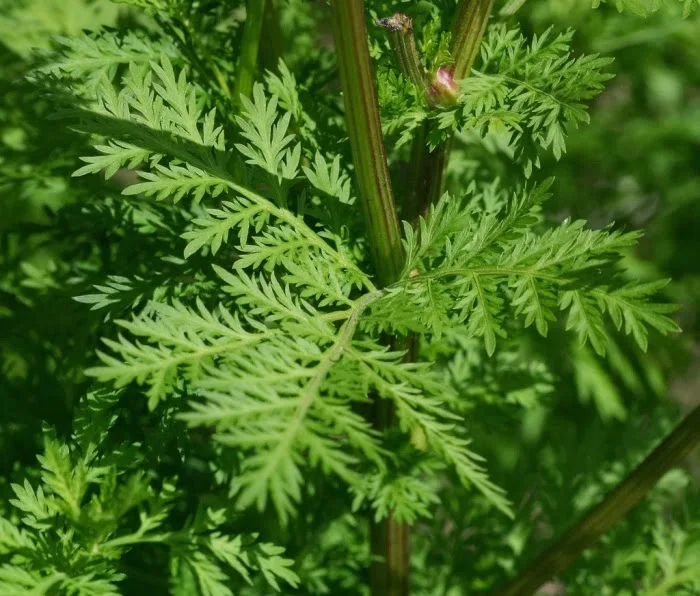
Artemisia Annua Sweet wormwood is a shrub with fern-like leaves and bright yellow flowers.

Wormwood, also called Sweet Wormwood, Sweet Annie, Sweet Sagewort and other such names, is ARTEMISIA ANNUA. It's, a native of Eurasia.  It's a common weed in much of the US, especially the east-central states.


Sweet wormwood (Artemisia annua) a shrub with fern-like leaves and bright yellow flowers. It's a member of the Asteraceae family and usually flowers between August and September. This plant thrives in direct sunlight and enjoys a variety of soil conditions. Native to Asia, it is now found throughout the world, especially in temperate zones at altitudes between 1000 and 1500 meters.

Artemisinin is the Key Antimalarial Constituent

In traditional Chinese medicine sweet wormwood is called "qinghoa" and used for the management of fevers and bleeding. It is also used for conditions of the digestive tract like flatulence and diarrhea. In modern allopathic medicine, a chemical component of this plant has shown astounding activity in the treatment of malaria. This constituent is a sesquiterpene lactone called "artemisinin" and it appears to kill and inhibit the growth of malaria-causing protozoa like Plasmodium falciparum.

Etymology

The etymology of the generic term (Artemisia) is safe and appears to derive from Artemisia, wife of Mausolus, King of Caria, but also, according to other etymologies, could come from the goddess of the hunt (Artemis), or from a Greek word " Artemesia "(= healthy), alluding to the medicinal properties of plants of the genus Artemisia. The specific name (year) refers to the annual biological cycle of the plant.


This plant has been used for decades in the treatment of many diseases, including dermatitis. Recently (after 1970) has been used against malaria, in fact, this plant is the active ingredient artemisinin antimalarial that has a significant function .

History
Artemisia annua has been used by Chinese herbalists for more than two thousand years in the treatment of many illnesses, such as skin diseases and malaria. The earliest record dates back to 200 BC, in the "Fifty-two Prescriptions" unearthed from the Mawangdui Han Dynasty tombs.


Its antimalarial application was first described, in Zhouhou Beiji Fang ("The Handbook of Prescriptions for Emergencies", Chinese: 肘后备急方), edited in the middle of the fourth century by Ge Hong. In that book, 43 malaria treatment methods were recorded.

according to the researches published in “Life Science”, artemisinin, a “Sweet wormwood” or “Artemisia Annua” derivative, was used in Chinese medicine and it can kill 98% of lung cancer cells in less than 16 hours. - See more at: http://www.healthyfoodhouse.com/amazing-herb-kills-98-cancer-cells-just-16-hours/#sthash.5r8zIkVw.dpuf
Uses

Sweet Annie is used in tea from leaves and flowers dried or not.
Tea made from Sweet Wormwood is anything but sweet. It's fairly bitter and medicinal tasting, and most people would despise it.
  • antibacterial (blocks the generation of bacteria);
  • antiseptic (property to prevent or slow the growth of microbes); 
  •  carminative (promotes the release of intestinal gas)
  • digestive;
  • febrifuge (lowers body temperature).
  • kill 98% of lung cancer cells in less that 16 hours with no impact on healthy cells
  • anti-malarial natural product
  • good for treating worms
  • used for fevers, 
  • bleeding and 
  • for conditions of the digestive tract like flatulence and
  •  diarrhea.  
  • Asthma: Prepare an inhalation by pouring one cup of boiling water onto some fresh or dried Artemisia leaves, and put the container on a low heat.
  • Hemorrhoids: This is the oldest recorded use of Artemisia tea in traditional Chinese medicine. Drink one liter of Artemisia tea each day.  
  • Stomach and Intestinal Problems, e.g. ulcerative colitis, Crohn’s disease, diverticulitis and chronic dysentery, also various rheumatic diseases, arthritis, soft-tissue rheumatism, borreliosis, babesiosis: Take Artemisia tea in the higher dose for 7 days, and then in the lower dose until the symptoms disappear. Artemisia disinfects the system and modulates the immune system (brings it back into balance).
  • including gout, diabetes, high blood pressure, warts, osteoporosis, epilepsy, glandular fever, migraine, psoriasis and leishmaniosis. The gate is wide open for further research! The patients take tea using 5g of Artemisia each day for a week.  

  • Skin problems; athlete’s foot, hemorrhoids, eczema: Use Artemisia ointment for its mild antiseptic effect. Pulverize 5 g (for hemorrhoids 2.5 g) of Artemisia leaves and mix with 100 ml of vegetable oil (the best is olive oil, otherwise peanut or sunflower oil). Heat this mixture on a water bath for 1 hour. Filter the mixture through a cloth, add 10 g of melted beeswax and immediately pour into containers (e.g. clean film canisters). Use within 1 year. Always apply on WET skin and rub in well.

Natural habitat
 

Native to Eurasia, from south-east Europe (including Albania, Bulgaria, Montenegro, Romania, Russia, Serbia, Turkey) to Vietnam and northern India. Naturalised in many countries (including Argentina, Austria, the Czech Republic, France, Germany, Hungary, Italy, Poland, Slovakia, Spain, Switzerland and the United States). It has even been occasionally recorded growing wild in the UK, arising from bird seed or wool shoddy, and has been cultivated experimentally as far north as Finland.

 
Natural habitat of Artemisia annua var. macrocephala alond rivers between redgrase.

Beautiful olive green foliage and with tiny flowers. This plant is excellent as a filler in any flower arrangement or any dried flower project. It's main use however is for it's stunning long lasting aroma which can fill the house with just a tiny movement of one small sprig. It is excellent for use in wreaths and other aroma projects. It's scent is strong and very pleasant, unlike any other plant. 


Blog 136-365


Wednesday, February 5, 2014

Legume Trees Fix the Soil

By Liliana Usvat

Question: what can be done to reverse the loss of the soil on large area due to deforestation and desertification?

Nitrogen-Fixing Trees Help Tropical Forests Make a Comeback

Some species of trees can restore lost nutrients in deforested areas, helping other trees to grow.


Denuded forests were efficiently restored in a few years, mostly with the help of leguminous plants that fix atmospheric nitrogen and pump it into the soil.

Nitrogen-fixing trees helped secure a large amount of carbon in just 12 years. In just about a decade, the new forests had accumulated 40 percent of carbon found in old, mature tropical forests. Legume trees contributed to nearly half of the carbon "sink.

Trees turn nitrogen fixation on and off according to the need for nitrogen in the system.

Legume trees accumulated carbon nine times faster than non nitrogen-fixers during the early stages of forests' comeback. These trees even provided enough nitrogen for other trees to grow. The legume trees' secret lies in their relationship with a kind of bacteria known as rhizobia, which help the trees fix nitrogen. Tropical forest soil is often low in nitrogen.

Leguminous trees are essential for a forests' recovery and so their loss could lead to long-term problems for many species of trees, researchers said.
"Diversity really matters. Each tree species fixes nitrogen and carbon differently so species important at 12 years drop out or become less common at 30 years.

Pods of carob (Ceratonia siliqua)


Pods of carob (Ceratonia siliqua), an ancient Mediterranean crop. Great livestock fodder and edible for humans as well. Courtesy Wikimedia Commons.
These trees are providing more than just food for animals. Livestock enjoy the shade they provide, especially in the tropical sun. Many of these trees fix nitrogen. Some even have pods edible for humans.

 The pods of Acacia nilotica


The pods of Acacia nilotica, from African semi-arid savannahs. Courtesy Wikimedia Commons.

Cassia grandis


Cassia grandis, from the humid tropical Americas. Courtesy Wikimedia Commons. 

The North American honey locust (Gleditia triacanthos)


The North American honey locust (Gleditia triacanthos), a good choice for cold temperate climates. Courtesy Wikimedia Commons.

The sweet pods of honey mesquite (Prosopis glandulosa)


The sweet pods of honey mesquite (Prosopis glandulosa), a North America nitrogen-fixing tree for cold, arid landscapes. There are mesquites throughout the dry Americas as well as native species from Africa and Asia, for highlands and lowlands, arid and semi-arid climates. Courtesy Wikimedia Commons.


Locust Tree


Locust trees transformed the ecosystem by adding nutrients. The soil analysis revealed that locust trees increased soil organic matter and nutrients, nearly doubling local nitrogen levels. 

Leguminous Tree Kowhai


Flowers of the leguminous tree, Kowhai, the national flower of New Zealand

Nitrogen Fixing Trees for Permaculture


Nitrogen fixation is a pattern of nutrient cycling which has successfully been used in perennial agriculture for millennia.  importance in agriculture.

Three legumes (nitrogen fixing trees, hereafter called NFTs) are especially valuable in subtropical and tropical permaculture. They can be integrated in a permaculture system to restore nutrient cycling and fertility self-reliance.


On unvegetated sites, "pioneer" plants (plants which grow and thrive in harsh, low-fertility conditions) begin the cycling of nutrients by mining and accumulating available nutrients. As more nutrients enter the biological system and vegetative cover is established, conditions for other non-pioneering species become favourable. Pioneers like NFTs tend to benefit other forms of life by boosting fertility and moderating harsh conditions.

Nitrogen fixing trees are often deep rooted, which allows them to gain access to nutrients in subsoil layers. Their constant leaf drop nourishes soil life, which in turn can support more plant life.

The extensive root system stabilises soil, while constantly growing and atrophying, adding organic matter to the soil while creating channels for aeration.

There are many species of NFTs that can also provide numerous useful products and functions, including food, wind protection, shade, animal fodder, fuel wood, living fence, and timber, in addition to providing nitrogen to the system.

Nitrogen: From the Air to the Plants
Nitrogen is often referred to as a primary limiting nutrient in plant growth. Simply put, when nitrogen is not available plants stop growing. Although lack of nitrogen is often viewed as a problem, nature has an immense reserve of nitrogen everywhere plants grow – in the air.

Air consists of approximately 80% nitrogen gas (N2), representing about 6400kg of N2 above every hectare of land. However, N2 is a stable gas, normally unavailable to plants. Nitrogen fixation, a process by which certain plants "fix" or gather atmospheric N2 and make it biologically available is an underlying pattern in natur.


How to Use NFTs in a System

In the tropics, most of the available nutrients (over 75%) are not in the soil but in the organic matter. In subtropical and tropical forests, nutrients are constantly cycling through the ecosystem.

Aside from enhancing overall fertility by accumulating nitrogen and other nutrients, NFTs establish readily, grow rapidly, and regrow easily from pruning.

They are perfectly suited to jump-start organic matter production on a site, creating an abundant source of nutrient-rich mulch for other plants. Many fast-growing NFTs can be cut back regularly over several years for mulch production.

From Desert to Oasis in 4 Years (Jordan)

Geoff Lawton’s  video in his ever-expanding lineup takes you to Wadi Rum in Jordan where he consulted on a 10 acre organic farm and rebuilt their failing farm into a commercial success.

Wadi Rum looks very much like your classic inhospitable desert region. It was used in the early 1960s as the backdrop set for the David Lean’s masterpiece, “Lawrence of Arabia.”

If you’ve ever watched the movie as Geoff had, you’ll be greeted with a sense of déjà Vu. The place looks familiar and intimidating. Geoff says it still has access to water in the dry Wadi canyons and aquifers.

Geoff Lawton takes you to Wadi Rum in Jordan and shows you how he transformed 10 acres of hostile desert into an abundant oasis, now producing food as a successful organic farm located in the Middle East.
Geoff reveals his design process and explains the steps needed to create a paradise on earth.  
“If we can do it here, we can do it anywhere.” he says.

Geoff Lawton reveals his little known secrets of soil fertility capture using a succession of plants and succulents.

See the amazing results in this 13 minute video. Don’t miss it!

http://www.geofflawton.com/sq/35684-desert-oasis


Blog 135 -365

Tuesday, February 4, 2014

Cacao Tree

By Liliana Usvat

The Latin name for cacao is Theobroma, which means 'food of the gods.' Anyone who has tasted cocoa knows why this name is so appropriate.

Chocolate is made from cacao beans. Cacao beans are the seeds of cacao pods which are the fruit of the cacao tree known in Latin as “Theobroma Cacao” meaning the food of the gods. Ask any chocoholic and they will agree the name is quite appropriate.


Chocolate comes from the tree Therobroma cacao, meaning food of the gods in Greek. Originating in Mexico, chocolate was first used by the Olmecs.

Cacao trees are delicate plants that live in the understory of tropical forests and require other, taller trees to shelter them from wind and sun. These petite trees top out at 60 feet tall in the wild (although most grow only 20 to 40 feet high), shielded from wind and sun by hardwoods and other trees that stretch as high as 200 feet. 
 
This showy tree draws other plants to it. Moss and lichens cling to the bark, as do small orchids. Theobroma Cacao’s own pink or white blossoms adorn the branches. Some of these pretty flowers turn into colorful fruits called pods, filled with sweet juice and bitter seeds. These seeds—the cocoa beans—form the heart of chocolate.


While scientists agree the tree originated in South or Central America, the exact location eludes them. Some believe it first grew in the Amazon basin of Brazil. Other scientists point to the Orinoco Valley of Venezuela, while still others root for Central America.
Others propose an enigmatic tale and posit that the Olmecs, the first known people to eat cacao, brought the tree from their original homeland, and that this unknown location may have disappeared under the sea.


Humans’ love affair with chocolate began at least 4,000 years ago in Mesoamerica, in present-day southern Mexico and Central America, where cacao grew wild. When the Olmecs unlocked the secret of how to eat this bitter seed, they launched an enduring phenomenon.

Since then, people around the world have turned to chocolate to cure sickness, appease gods, show love, buy rabbits, fete holidays, survive fasts, ward off scorpions and sustain warriors.

In fact, the making of chocolate has evolved into an industry so large that 40 to 50 million people depend on cocoa for their livelihoods—and chocolate farmers produce 3.8 million tons of cocoa beans per year.

For many centuries, chocolate was a bitter drink. Made from cacao nibs, it was akin to modern-day baking chocolate mixed with water. Some cultures drank it cold and some hot.
The ancients added flavorings such as allspice, cinnamon, chili powder and vanilla. They may have mixed in maize or sweeteners such as honey, agave syrup or cactus.

History


In Mexico during the time of the Aztec kings the small seeds were utilized as coins twelve approximating to the value of 1d., the smallest actual coin in use then being worth about 6d. The seeds were necessary for small transactions. The method is still in use in some parts of Mexico.

When the Spaniards arrived, the Mesoamericans were busily drinking cacao. They were so besotted by this drink, in fact, that they proudly shared it with company. In 1519, the Aztec emperor Montezuma served some to his new guest, the conquistador Hernando Cortes.  The Aztecs thought that Cortes was the reincarnation of an exiled god-king. Instead, he had come calling to find rumored Aztec gold, and within three years he brought down the Aztec empire.

Cortes brought cacao home to Spain in 1529, according to many scholars. He was not the first to do so. Nearly 30 years prior, Christopher Columbus had presented cacao beans from the Caribbean to King Ferdinand and Queen Isabella as a curiosity, and nobody considered them further.

Yet Cortes did his homework and sweetened the cacao drink for Spaniards, adding copious amounts of sugar that was unavailable in Mesoamerica. Before sailing home, he also planted cacao trees in the Caribbean.
 
For nearly 100 years, Spanish aristocrats secretly sipped this new delicacy. They also continued to experiment, adding cinnamon and vanilla to the sugar and serving it steaming hot. As the drink gained popularity, the Spanish planted more cacao trees in its colonies in Ecuador, Venezuela, Peru and Jamaica.

The Aztecs and Maya peoples had many ways of making food and drink from cocoa beans. They also used the beans as money, for example exchanging one turkey for 200 beans, or one slave for 100 beans. 

Cocoa beans were so precious that only the royals, warriors and the wealthy could afford to eat and drink chocolate. The hieroglyphs tell us that the Aztecs and Maya peoples drank cocoa powder suspended in water, and used flavourings such as chillies (Capsicum annuum), vanilla (Vanilla planifolia), achiote (Bixa orellana), aromatic herbs and honey.


Some interesting facts about the cacao tree
 
  • it grows to a height of 12 to 15 metres
  • it bears fruit continuously
  • it stops bearing fruit after 25 years, although it can live much longer
  • in the wild, it always grows beneath the much taller rainforest canopy to be protected from direct sunlight and wind
  • it requires ground cover to maintain soil moisture; its dead leaves serve this purpose
  • it has flowers directly on its trunk and major branches
  • it has flowers pollinated by little midges and not bees
  • it has no way to release its seeds by itself; it needs either animals or humans to open its pods
Cacao leaves


When cacao leaves fall to the forest floor, they mix with the leaves of other plants and decay. Fungi and other organisms decompose this debris, which are going to feed the soil with essential nutrients, thus fertilizing the tree. In addition, decaying leaves provide the perfect breeding ground for midges, the tiny insects that pollinate cacao flowers.

Cacao roots

Cacao roots soak up rainfall and nutrients from the soil and leaf litter. Stretching across the thin forest floor, these roots also anchor the cacao tree and help prevent soil erosion. Cultivated cacao's root system is shallow, however, and relies heavily on the decaying cover of leaf litter to remain healthy. Most of the nutrients in rainforest soils can be found in the topmost layer of decaying vegetation. When grown naturally from seed the tree has a 2 metre deep taproot. However in cultivation, most plantations use vegetative reproduction (cuttings) that results in a tree without taproot.

Cacao pods


Cacao pods are the fruits of the cacao tree. Successfully pollinated flowers mature into this ribbed and oval fruit. The ripening process takes about five months. It is quite common to see both flowers and pods together on the same tree throughout the year. The thick shelled cacao pod contains "mucilage", a sweet white pulp that surrounds the bitter cocoa beans.

Each tree produces about 20 pods and each pod contains between 20 and 60 seeds. In order to produce one kilogramme of cocoa paste about 10 pods are required. Healthy mature pods will eventually rot on the tree unless picked by an animal or farmer. When the pods ripen they turn from green or yellow to orange or red.

Cocoa beans


Cocoa beans, the base for making chocolate, are the seeds of the cacao tree. They are found inside the cacao pods, surrounded by a sweet white pulp. Each pod contains between 20 and 60 cocoa beans. A variety of chemicals, including theobromine which is very similar to caffeine, give the seeds a bitter flavour. Beans can only germinate within 2 weeks of being harvested.

When monkeys, birds, human or other animals break open the pods to reach the delicious sweet pulp, they spit out the bitter-tasting seeds. This is the clever adaptation that the cacao tree evolved so that its seeds hit the forest floor and sprout into new trees.


Medicinal Action and Uses


Cocoa is prepared by grinding the beans into a paste between hot rollers and mixing it with sugar and starch, part of the fat being removed. Chocolate is prepared in much the same way, but the fat is retained.

Unfermented cocoa seeds and the seed coat are used to treat a variety of ailments, including
  • diabetes, 
  • digestive and 
  • chest complaints. 
  • Cocoa powder, prepared from fermented cocoa beans, is used to prevent heart disease. 
  • Cocoa butter is taken to lower cholesterol levels,
It is also used widely in foods and pharmaceutical preparations, as well as being used as a rich moisturiser for the skin.


Oil of Theobroma or cacao butter is a yellowish white solid, with an odour resembling that of cocoa, taste bland and agreeable; generally extracted by expression. It is used as an
  • ingredient in cosmetic ointments and in 
  •  pharmacy for coating pills and 
  • preparing suppositories. 
  • It has excellent emollient properties and 
  • is used to soften and protect chapped hands and lips
  • Theobromine, the alkaloid contained in the beans, resembles caffeine in its action, but its effect on the central nervous system is less powerful. 
  • Its action on muscle, the kidneys and the heart is more pronounced. 
  • It is used principally for its diuretic effect due to stimulation of the renal epithelium; 
  •  it is especially useful when there is an accumulation of fluid in the body resulting from cardiac failure, when
  •  it is often given with digitalis to relieve dilatation. 
  • It is also employed in high blood pressure as it dilates the blood-vessels. 
  • It is best administered in powders or cachets.
Dosage---Theobromine, 5 to 10 grains.


The Olmecs, Mayans, and Aztecs used parts from the tree to
  • treat anxiety, 
  • fever, 
  • fatigue, and 
  • coughs. 
  • Five hundred years ago the plant was brought to Europe, where it was used to treat kidney stones and 
  • cuts and 
  • burns, among other things. 
  • Recent research shows that chocolate contains polyphenols, which prevent heart disease.
Soil Improvement

The crushed shells of cocoa beans are used as an alternative to peat mulch. Mulches are layered on to the soil surface to suppress weeds, conserve moisture, improve its visual appearance and minimize erosion. Not only does this make good use of cocoa-shell, which is a by-product of the chocolate industry, but it also helps reduce the use of peat.

Peat bogs are important sites for wildlife and also help to protect the earth from global warming. In Great Britain, over 94% of the 69,700 hectares of peat bogs have been damaged or destroyed. Most of this damage has occurred in the last 50 or so years, since the promotion of large-scale use of peat for the horticultural industry, which now discourages this.

Blog 134 -365

Monday, February 3, 2014

Liliana Usvat: Plants that Grow in the Forest: Garlic - Medicinal Uses

Liliana Usvat: Plants that Grow in the Forest: Garlic - Medicinal Uses

Plants that Grow in the Forest: Garlic - Medicinal Uses

Liliana Usvat

When a forest is cut ( destroyed) all the plants that live in the forest are destroyed.
  • Clear cutting the forest is a term that means everything is removed from the forest with cutting the trees for industrial use. So the forest in the initial format has no chance to regenerate.
  • This is done lately in the name of the reduction of gases and the fight against global warming. 
  • Writers, "scientists" are actually paid to justify cutting the forests. How? By replacing coal power plants with wood power plants 43 in UK 220 in USA. 
  • Universities are teaching students (that actually pay to study) the management of the forest meaning how to cut the trees.
So let-s concentrate today on a plant that actually grow in the forest: garlic.
We all know that garlic is also cultivated but in the original state was and still is growing in the forest.

History


With a history of human use of over 7,000 years, garlic is native to central Asia, and has long been a staple in the Mediterranean region, as well as a frequent seasoning in Asia, Africa, and Europe. It was known to Ancient Egyptians, and has been used for both culinary and medicinal purposes.

Species


Garlic - Allium sativum grows in the wild in areas where it has become naturalized.
  • The "wild garlic", "crow garlic ", and "field garlic" of Britain are members of the species Allium ursinum, Allium vineale, and Allium oleraceum, respectively. 
  • In North America, Allium vineale (known as "wild garlic" or "crow garlic") and Allium canadense, known as "meadow garlic" or "wild garlic" and "wild onion", are common weeds in fields.
  • One of the best-known "garlics", the so-called elephant garlic, is actually a wild leek (Allium ampeloprasum), and not a true garlic. Single clove garlic (also called pearl or solo garlic) originated in the Yunnan province of China.

Culinary uses

Garlic is widely used around the world for its pungent flavor as a seasoning or condiment.
The garlic plant's bulb is the most commonly used part of the plant. With the exception of the single clove types, garlic bulbs are normally divided into numerous fleshy sections called cloves.

Garlic cloves are used for consumption (raw or cooked) or for medicinal purposes. They have a characteristic pungent, spicy flavor that mellows and sweetens considerably with cooking.
Other parts of the garlic plant are also edible.

The leaves and flowers (bulbils) on the head (spathe) are sometimes eaten. They are milder in flavor than the bulbs,and are most often consumed while immature and still tender. Immature garlic is sometimes pulled, rather like a scallion, and sold as "green garlic".

When green garlic is allowed to grow past the "scallion" stage, but not permitted to fully mature, it may produce a garlic "round", a bulb like a boiling onion, but not separated into cloves like a mature bulb.Additionally, the immature flower stalks (scapes) of the hardneck and elephant types are sometimes marketed for uses similar to asparagus in stir-fries.

Historical use

Hippocrates, Galen, Pliny the Elder, and Dioscorides all mention the use of garlic for many conditions, including 
  • parasites, 
  • respiratory problems, 
  • poor digestion, and 
  • low energy. 
Its use in China dates back to 2000 BCE.

It was consumed by ancient Greek and Roman soldiers, sailors, and rural classes (Virgil, Ecologues ii. 11), and, according to Pliny the Elder (Natural History ), by the African peasantry. Galen eulogizes it as the "rustic's theriac" (cure-all) , and Alexander Neckam, a writer of the 12th century , recommends it as a palliative for the heat of the sun in field labor.

Medicinal use 
 
  • Modern science has shown that garlic is a powerful natural antibiotic
  • Garlic prevents strokes and reduce tension in the arteries. To be useful in this case, it is recommended to consume garlic chopped or tossed  reduce high blood pressure.
  • Garlic is also alleged to help regulate blood sugar levels
  • Regular and prolonged use of therapeutic amounts of aged garlic extracts lower blood homocysteine levels and has been shown to prevent some complications of diabetes 
  • Garlic was used as an antiseptic to prevent gangrene during World War I and World War II
  • In 1924, it was found to be an effective way to prevent scurvy, because of its high vitamin C content.
  • People who usually have cold hands and feet, regardless of season, are recommended to consume garlic permanent. Sulphur compounds in garlic normalizes blood circulation, regulates blood pressure, and peripheral circulation.
  • garlic has diuretic action, helping to eliminate retained water in the body decreases and high blood pressure 
  • Influenza - three to four cloves of garlic daily consumption reduced by at least one third the odds of us getting sick during a flu epidemic. This is because garlic, besides the fact that it has the effect of strengthening the immunity, contains substances that kill or slow the growth of the influenza virus. 
  • Oral Candida - a study of experimental medicine shows a parasitic fungus antiseptic garlic stronger than Nystatin, the drug commonly anticandidozic. Mouth rinses are made 2-3 times per day, with one quarter cup of water, which dissolved a half tablespoon of garlic macerated in alcohol. 
  • Athlete's foot disease - put a small poultice, made ​​from 1 to 2 cloves garlic, between fingers affected. Demonstrated by direct testing this simple treatment effects at least comparable to those of sophisticated synthetic creams used to treat this disease. 
 Recipe for unblocking arteries Cholesterol deposits


  • 250 ml of garlic juice organic
  • 250 ml organic ginger juice
  • 250 ml organic lemon juice
  • 250 ml organic apple cider vinegar
  • 750 ml of unpasteurized  honey


Mix ginger garlic lemon juice and vinegar and simmer for an hour.
Remained after boiling mixture is allowed to cool, mix well with honey and put it in the fridge in a glass jar (not plastic).
Drink cite a spoon in the morning before breakfast.
I understand that some people Iulian Barbu (who were scheduled for "by-pass"
surgery) after consuming this product for 2-3 months no longer needed surgery.

Garlic Festivals - Eco Tourism

The 4th annual Sussex County Harvest, Honey and Garlic Festival  held at the Sussex County Fairgrounds, 37 Plains Road, Augusta, on October 12th from 10am - 4pm. This Festival is a celebration of agritourism, ecotourism and arts & heritage tourism.


The County of Sussex, the Sussex County Beekeepers Association and the Garden State Garlic Growers are joining with the Sussex County Farm and Horse Show to showcase New Jersey's great northwest


Toronto Garlic Festival

The purpose of the annual Toronto Garlic Festival is to:
- Be a place for festival visitors to relax and have fun with family and friends;
- Promote the health benefits of Ontario garlic;

- Build a stronger connection between urban communities and rural  agriculture;
- Educate and encourage home cooks and chefs to use Ontario produce (including garlic) in their cooking;
- Encourage Ontario farmers and urban gardeners to grow more garlic,  including rare and heirloom varieties.

 
Blog 133 -365

Saturday, February 1, 2014

Forest Plants - Tumeric - Mecicinal Uses

By Liliana Usvat

Turmeric grows wild in the forests of South and Southeast Asia. Turmeric comes from the root of the Curcuma longa plant and has a tough brown skin and a deep orange flesh. Turmeric has long been used as a powerful anti-inflammatory in both the Chinese and Indian systems of medicine. Turmeric was traditionally called "Indian saffron" because of its deep yellow-orange color and has been used throughout history as a condiment, healing remedy and textile dye. 


Turmeric is an excellent source of both iron and manganese. It is also a good source of vitamin B6, dietary fiber, and potassium.

Culinary

 
Turmeric is widely used as a spice in South Asian and Middle Eastern cooking. Many Persian dishes use turmeric as a starter ingredient. Almost all Iranian fried dishes consist of oil, onions, and turmeric followed by any other ingredients that are to be included.

Turmeric is mostly used in savory dishes, but is used in some sweet dishes, such as the cake Sfouf. In India, turmeric plant leaf is used to prepare special sweet dishes, patoleo, by layering rice flour and coconut-jaggery mixture on the leaf, and then closing and steaming it in a special copper steamer (goa).

Folk medicine and traditional uses

In Tamilnadu, turmeric has been used traditionally for thousands of years as a remedy for stomach and liver ailments, as well as topically to heal sores, basically for its supposed antimicrobial property.

 In the Siddha system (since c. 1900 BCE) turmeric was a medicine for a range of diseases and conditions, including those of the skin, pulmonary, and gastrointestinal systems, aches, pains, wounds, sprains, and liver disorders. A fresh juice is commonly used in many skin conditions, including
 
  • eczema, 
  • chicken pox, 
  • shingles, 
  • allergy, and 
  • scabies.
Manjal Pal (turmeric milk) is warm milk mixed with some turmeric powder. It is commonly used in Tamilnadu as a home remedy when someone is suffering from fever. Turmeric paste is often used in Tamilnadu as an antiseptic in open wounds, while chun-holud (turmeric with slaked lime) is used to stop bleeding as home remedies. It is also used as a detanning agent in Tamilnadu.

The active compound curcumin is believed to have a wide range of biological effects including 
  • anti-inflammatory, 
  • improved Liver Functions
  • antioxidant, 
  • antitumour,
  • antibacterial, and
  • antiviral activities, which indicate potential in clinical medicine. 
  • In Chinese medicine, it is used for treatment of various infections and as an antiseptic.
  • administration of curcumin or turmeric can suppress several stages of cancer development in multiple tumor models.

  • irreversibly inhibit the multiplication of leukemia cells in a cell culture 
  • Help for Cystic Fibrosis Sufferers 
  • Epidemiological studies have linked the frequent use of turmeric to lower rates of breast, prostate, lung and colon cancer; laboratory experiments have shown curcumin can prevent tumors from forming; and research conducted at the University of Texas suggests that even when breast cancer is already present, curcumin can help slow the spread of breast cancer cells to the lungs in mice. 

  • An Effective Treatment for Inflammatory Bowel Disease
  • prevent the oxidation of cholesterol in the body. Since oxidized cholesterol is what damages blood vessels and builds up in the plaques that can lead to heart attack or stroke, preventing the oxidation of new cholesterol may help to reduce the progression of atherosclerosis and diabetic heart disease.   
  • Relief for Rheumatoid Arthritis 

  • Inhibits Cancer Cell Growth and Metastases
  • Protection against Alzheimer's Disease
  • Turmeric and Onions May Help Prevent Colon Cancer. Curcumin, a phytonutrient found in the curry spice turmeric, and quercitin, an antioxidant in onions, reduce both the size and number of precancerous lesions in the human intestinal tract
Tips for Preparing Turmeric 
Be careful when using turmeric since its deep color can easily stain. To avoid a lasting stain, quickly wash any area with which it has made contact with soap and water. To prevent staining your hands, you might consider wearing kitchen gloves while handling turmeric. 
If you are able to find turmeric rhizomes in the grocery store, you can make your own fresh turmeric powder by boiling, drying and then grinding it into a fine consistency.

History

Turmeric has been used in Tamilnadu for thousands of years and is a major part of Siddha medicine. It was first used as a dye and then later for its medicinal properties.

 Siddha Medicine

Siddha Medicineis one of the oldest medical systems known to mankind  Reported to have surfaced more than 10000 years ago, the Siddha system of medicine is considered one of the most ancient traditional medical systems. 

The Siddha flourished in the period of Indus Valley civilization. Palm leaf manuscripts says that the Siddha system was first described by Lord Shiva to his wife Parvathy. Parvathy explained all this knowledge to her son Lord Muruga. He taught all these knowledge to his disciple sage Agasthya. Agasthya taught 18 Siddhars and they spread this knowledge to human beings.
 
Siddhars were of the concept that a healthy soul can only be developed through a healthy body. So they developed methods and medication that are believed to strengthen their physical body and thereby their souls.

Blog 132 - 365

Friday, January 31, 2014

Green Belt of the Cities

By Liliana Usvat


A green belt or greenbelt is a policy and land use designation used in land use planning to retain areas of largely undeveloped, wild, or agricultural land surrounding or neighbouring urban areas.

Similar concepts are greenways or green wedges which have a linear character and may run through an urban area instead of around it. In essence, a green belt is an invisible line designating a border around a certain area, preventing development of the area and allowing wildlife to return and be established.

Greenbelt and Permaculture
Edible Landscapes ~ Forests and Watersheds

The increase of urban tree canopy in Greenbelt West (USA) will help to reduce stormwater runoff into Indian Creek near Springhill Lake Recreation Center and mitigate the urban heat island effect. The GFF will also provide nutrients for humans and wildlife, and become self-fertilizing and extend the landscape into more trees and shrubs.


The City of Greenbelt (University of Maryland USA), was founded on the concepts of community design and “green” planning, in which every acre is put to its best and most sustainable use. Permaculture and other best land management practices are now being formally established throughout the city, and Forest Gardening is a major focus.


The Greenbelt Food Forest (GFF) brings together Greenbelt neighbors, community organizations, and public agencies to benefit our area. The focus is on working together to improve water quality in our local watershed and throughout the Chesapeake Bay region.

Detroit USA


Detroit was once one of the wealthiest and most famous cities in the world.  The city has fallen on hard times in recent years, but–thanks to the new urban gardening movement that’s sprouting up in the city–people’s eyes are once again turning towards the Motor City.

The population of Detroit has dropped from a high point of 1.9 million 60 years ago to just over 700,000. With so much land left vacant as result, the city has been given an opportunity reinvent itself. “We estimate that there are between 1500 and 2000 gardens in the city of Detroit,”

Urban farms reduce carbon emissions by cutting down on the number of miles food must travel to make it to a grocery store and, therefore, reducing fuel consumption in the shipping process. Many of the farms in Detroit use organic practices or incorporate the principles of permaculture, a type of sustainable design that is based on mimicking natural processes.

Songdo, South Korea Aims to be World’s Greenest City


Five years ago, Songdo was just an area of undeveloped mudflats. Now, it is a pioneer in the development of “smart cities.” “We envision Songdo to grow into a global Asian city like Hong Kong or Singapore,” said a representative of the Incheon Free Economic Zone, where Songdo is located.

The buildings are planned around a 100-acre central park, and green space accounts for over 40% of the area of the city. The city is so walkable, that cars are entirely unnecessary. Most commutes simply involve walking across the park from an apartment building to a nearby office space.
Of the many futuristic elements of Songdo,the city has a pneumatic trash shoot that funnels garbage to a central waste processing center.

Once there, food waste is put to use for agricultural purposes while much of the rest of the trash is recycled. Water is also cleverly managed by a central utility that recycles 40% of the wastewater.

History

The Old Testament outlines a proposal for a green belt around the Levite towns in the Land of Israel Moses Maimonides expounded that the greenbelt plan from the Old Testament referred to all towns in ancient Israel.

In the 7th century, Muhammad established a green belt around Medina. He did this by prohibiting any further removal of trees in a 12-mile long strip around the city.

In 1580 Elizabeth I of England banned new building in a 3-mile wide belt around the City of London in an attempt to stop the spread of plague. However, it was possible to buy dispensations which reduced the effectiveness of the proclamation.

In modern times, green belt policy was pioneered in the United Kingdom in the 1930s after pressure from the CPRE and various other organizations.

There are fourteen green belt areas, in the UK covering 16,716 km², or 13% of England, and 164 km² of Scotland; for a detailed discussion of these, see Green belt (UK). Other notable examples are the Ottawa Greenbelt and Golden Horseshoe Greenbeltin Ontario, Canada. Ottawa's 20,350 hectare greenbelt is managed by the National Capital Commission (NCC).

The more general term in the U.S. is green space or greenspace, which may be a very small area such as a park.

The concept of "green belt" has evolved in recent years to encompass not only "Greenspace" but also "Greenstructure", taking into account all urban greenspaces, an important aspect of sustainable development in the 21st century. The European Commission's COST Action C11 (COST - European Cooperation in Science and Technology) is undertaking "Case studies in Greenstructure Planning" involving 15 European countries.

An act of the Swedish parliament from 1994 has declared a series of parks in Stockholm and the adjacent municipality of Solna to its north a "national city park" called Ekoparken (the "Eco park"; it stretches from the parks surrounding the royal palaces of Ulriksdal and Haga in Solna, through the Brunnsviken area, down to the former royal hunting grounds of North and South Djurgården).

Blog 131-365