Tuesday, March 11, 2014

Ornamental Cherry Trees

By Liliana Usvat
Blog 156-365


The Japanese flowering cherry is a member of the Family Rosaceae, commonly known as the Rose Family. 

Ornamental cherries were sent as gifts of friendship by Japan to cities in North America starting as early as 1912, when 3,000 were given to Washington, D.C. In the early 1940s, 700 saplings were given to Vancouver, and were later planted in the city’s Queen Elizabeth Park.

During the 1950s, Vancouver parks officials, who thought the cherry was the perfect specimen to replace forest trees that were crowding city boulevards, purchased more and began grafting their own.
 
Today, almost 20,000 cherry trees grace Vancouver’s streets, and there are many more beautifying public and private gardens across Canada.

Cherry blossoms are symbols of simplicity, transience and ephemeral beauty. In medieval Japan, they symbolized the samurai. These men, who were prepared to sacrifice themselves for their masters, led lives like that of the cherry blossom—beautiful but brief.
 
The annual viewing of the cherry blooms, or hanami, has an almost religious fervour in Japan; for cen­turies, blossom-viewing picnics have been a rite of spring. Millions of people follow the northward progression of the blooms, and train stations post signs indicating the best spots for viewing. Cherry blossom viewing is now popular in North America as well.

Lifespan
 
On average, ornamental cherry trees live between 15 and 20 years, but some varieties can survive longer with the correct care. For example, Yoshino cherries normally live only into their second decade, but some specimens in Washington, D.C., have survived since their donation in 1912 by the Japanese government. Higan cherry trees are among the most stress-, heat- and cold-tolerant varieties and tend to survive well past their 20th year.

The cherry tree is the most widely planted ornamental tree in the United States. This genus contains over 400 species and many hybrids and cultivars native to temperate zones in Asia, Europe and America. Cherry trees require cold weather to flower and fruit, so they do not grow in tropical climates and would not grow well indoors.

The Fastest

The fastest growing flowering cherry trees grow 3 feet per year. Yoshino flowering cherry (Prunus yedoensis), also known as Potomac cherry and Tokyo cherry, has a canopy in an oval, rounded or umbrella shape that reaches 35 feet tall. Its fragrant pink flowers blossom in winter or spring, and its leaves turn bronze or gold in fall.  

Fruit Production

Cherry trees grown for fruit production are mostly hybrids of Asian species with more cold-hardy American species. Over 99 percent of fruit grown is sour cherries, primarily used for baking and canning. Cherry trees in orchards are kept to 15 feet tall to facilitate harvesting, but left to themselves would grow to 30 feet.
 

Beneficial Uses

While the tree bears no fruit, the fruit of other cultivars have many associated health benefits.  In Asian folk medicine, the cherries proved beneficial for a variety of ailments including:
  • heart ailments, 
  • dropsy,
  •  toothache and 
  • gout-pain.  
  • Modern analysis of the fruit has revealed strong antiviral, antioxidative properties. 
  • Korean studies champion the cherries as a valuable addition to any diet.
  • Centuries ago cherry tree bark was heated and used as a diuretic and astringent.
  • The fruit is rich in potassium, magnesium, iron and phosphorous. Cherries are also an excellent source of vitamins C, K and B6.

Cherry Care

  • Water the tree regularly. Cherry trees need moist soil to thrive.
  • Space cherry trees 35 to 40 feet apart to avoid diseases from spreading.
  • Prune the tree in late winter to encourage growth of new fruit.
  • Add fertilizer to the soil each spring.
  • Do not plant cherry trees in the shade of tall buildings, as they need full sunlight to grow.
Feng Shui Flower Cherry Blossom Symbol

The blossoming flowers of cherry, have always been used to bring the energy of new beginnings, a sense of freshness and innocence. Most often the image of cherry blossoms is used as a love & marriage cure, but can also be used as feng shui cure for health.

Monday, March 10, 2014

Liliana Usvat: Low water Trees - Acacia farnesiana or Sweet Acacia Medicinal Uses

Liliana Usvat: Low water Trees - Acacia farnesiana or Sweet Acacia Medicinal Uses

Low water Trees - Acacia farnesiana or Sweet Acacia Medicinal Uses

By Liliana Usvat
Blog 155-365

There is a science that is able to transform deserts in Forest Foods. The name of this science is Permaculture.
Here is a video that show the process. It is an amazing video that I recommend it.
http://permaculturenews.org/2009/12/11/greening-the-desert-ii-final/

For now we take one plant at a time and focus on it to promote it to be planted in arid areas.

Acacia farnesiana or Sweet Acacia


This tall, semievergreen, native shrub or small tree has feathery, finely divided leaflets of a soft, medium green color. The slightly rough stems are a rich chocolate brown or grey, possessing long, sharp, multiple thorns. The small, yellow, puff-like flowers are very fragrant and appear in clusters in late winter then sporadically after each new flush of growth, providing nearly year-round bloom. The persistent fruits have a glossy coat and contain seeds which are cherished by birds and other wildlife.

Use and Management

It can be trained into a tree for use in median strips, or can be used as a street tree where there is not a need for tall-vehicle clearance beneath the crown. The small stature and low, spreading branching habit makes pruning for vehicular clearance difficult unless it is properly trained from an early age. But the required input of manhours for early training may be offset by the high drought, pest and insect resistance of the tree. Do not locate the tree too close to where people can be injured by the sharp thorns on the branches.

Although easy to grow in any acid or alkaline soil, including clay, the leaves will drop if the soil is allowed to dry out. This drought avoidance mechanism allows the plant to grow well with no irrigation once established.

Growing best in full sun, this thorny, well-branched shrub makes an excellent barrier planting or nesting cover for wildlife. When trained as a small tree and used as a freestanding specimen, it is likely to provide a source for comments, such as "what's that?".

 But its growth rate is extremely slow, making it unpopular in the nursery trade but popular with those who care for it in the landscape. Sweet Acacia has its place in any sunny shrub border or as an accent plant in any garden if located away from areas where children frequent, since the thorns can inflict severe pain. It is well suited for dry climates with little rainfall.
Propagation of Sweet Acacia is by seeds or cuttings.

Fruits

It will continue to bloom throughout the year, though more sparsely. It produces leguminous fruit encased in woody pods. The seeds are attractive to birds and other wildlife.
 

Traditional medicine

  • The bark and the flowers are the parts of the tree most used in traditional medicine. V. farnesiana has been used in Colombia to treat malaria
  • Colombians bathe in the bark decoction as a treatment for typhoid
  • The extract from the tree bark and leaves has shown some efficacy against the malarial pathogen Plasmodium falciparum in animal models . 
  • Indigenous Australians have used the roots and bark of the tree to treat diarrhea and diseases of the skin. 
  • The tree's leaves can also be rubbed on the skin to treat skin diseases.
  • The flowers are added to ointment, which is rubbed on the forehead to treat headaches
  • The powdered dried leaves have been applied externally as a treatment for wounds
  • The green pods have been decocted and used in the treatment of dysentery and inflammations of the skin and raucous membrane
  • The juice of the bark is used in Nepal to treat swellings
  • An infusion of the pod has been used in the treatment of sore throats, diarrhoea, leucorrhoea, conjunctivitis, and uterorrhagia

Food

The leaves are used as a tamarind flavoring for chutneys and the pods are roasted to be used in sweet and sour dishes
Notes

The common name, huisache, is Nahuatl (language of the Aztecs) meaning many thorns. The fragrant flowers have been used in the perfume industry. This acacia will drop its leaves under severe drought conditions as a defense mechanism.

Friday, March 7, 2014

Liliana Usvat: Low-Water Trees Leather-Leaf Acacia or Acacia craspedocarpa Medicinal Uses

Liliana Usvat: Low-Water Trees Leather-Leaf Acacia or Acacia craspedocarpa Medicinal Uses

Low-Water Trees Leather-Leaf Acacia or Acacia craspedocarpa Medicinal Uses

By Liliana Usvat
Blog 154 -365


Endemic to Western Australia, it occurs in watercourses, on floodplains and alongside rivers throughout south-central Western Australia.
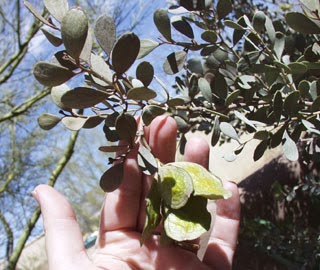
Hop mulga is a spreading, shrubby tree that can grow to three metres but it is usually smaller. Like most Acacia species, it has phyllodes rather than true leaves. These are bluish green, about two centimetres long and one centimetres wide. The flowers are yellow, and held in cylindrical clusters up to two centimetres long and five millimetres in diameter. The pods are broad and flat, and resemble the pods of the hop plant.
 

In spring individual, small, bright yellow, elongated rod flowers are produced. Tan-colored, flat, 2" long pods develop from the flowers. The botanical name probably is drawn from a description of these pods since crasped translates to broad in Latin and carp refers to fruit. Leather Leaf Acacia is moderately cold hardy (15 to 20 F) and grows well in full and partial sun. It will tolerate a variety of soils but does best in well-draining soils. 

Established plants are highly adapted to harsh summer conditions and can survive without supplemental irrigation. Watering once a month will ensure limited growth but more frequent irrigation is needed to achieve optimal growth, appearance and flowering. This plant grows slowly and in some landscape applications it may be desirable to install larger container sizes (15 gallon to 36" box) to get more immediate impact.
 
Specimens pruned into tree form can be used as individual specimens or in small groupings. Leather Leaf are most commonly uses an as informal hedge planting or as part of a landscape screen. Because the growth of established specimens can be easily regulated by irrigation practices, A. craspedocarpa offers a low maintenance alternative to Oleanders or other non-desert species used as landscape screens.

Medicinal Uses
 
Ailments of a wide variety are treated with some form of Acacia spp., including 
  • diarrhea,  
  • laryngitis,
  • venereal diseases,
  • cuts and abrasions,
  •  skin irritation,
  •  the pain of childbirth, 
  • sores, 
  • scabies, 
  • aching joints, and 
  • congestion 
Habitat

In its native growth areas it is found in red clay or loam, alluvium, stony red earth. In low-lying areas, floodplains, along watercourses, & flats. Xeriscape ornamental in lower elevations in the Phoenix and Tucson areas of Arizona.

Thursday, March 6, 2014

Low Water Trees - Acacia berlandieri Common Name Guajillo

By Liliana Usvat
Blog 153-365

Acacia Berlandieri Common Name Guajillo


Senegalia berlandieri (Berlandier Acacia, Guajillo Acacia, guajillo, huajillo) is a shrub native to the Southwestern United States and northeast Mexico that belongs to the subfamily Mimosoideae (wattles) of Fabaceae (legumes). It grows 1 to 5 metres (3.3 to 16.4 ft) tall, with blossoms that are spherical and white, occurring from February through April.

 
The berlandieri epithet comes from the name of Jean-Louis Berlandier,a French naturalist who studied wildlife native to Texas and Mexico. S. berlandieri contains a wide variety of alkaloids and has been known to cause toxic reactions in domestic animals such as goats.
Needs low amount of water.

Guajillo is a small, spreading tree that grows to 12 feet tall by 12 feet wide. It is very shrub-like but can be trained into a small accent tree. Naturally multi-trunked, it is evergreen in the low elevation zones and briefly deciduous where winters have regular frosts.
 
The compound light-green leaves are divided into many tiny leaflets giving Guajillo an interesting, fern-like appearance. Variable sized thorns are present on branches. In the late spring, hundreds of creamy white flower clusters burst into bloom. These ball-like flower clusters are sweetly fragrant. Native to Texas and the Chihuahuan desert, Guajillo is usually grown as a large, rounded shrub but is easily trained to a small tree.

Distribution
 
Guajillo grows in sandy soils and shallow ridge sites in south Texas and the very southern portion of the Texas Hill Country.  
Elevation: Native at 1,000 to 3,000 feet.

Maintenance
 
Plant Guajillo tree in the fall in full sunlight and in well-drained soil. Guajillo is drought-tolerant, surviving on low amounts of rainfall in nature. However, it will benefit from regular watering in spring and summer. It has a moderate growth rate and may take a few years to achieve small tree stature. Being native to nutrient-poor, limestone soils, Guajillo grows extremely well in Southern Arizona without the addition of fertilizer. Water established Guajillo trees once a week in the summer and every two to three weeks in the winter. Prune the lowest two or three limbs in spring to shape and train into a small tree. Prune away dead or damaged limbs in the early spring.

Uses

This is a very important honey-plant, or tree, rather, in Texas, for the dry arid portions where there is little or no irrigation, and where nothing, in fact, grows except mesquite, catclaw, sage-brush, and other desert plants. The fact that it does not depend on irrigation, and needs only a scanty amount of rain early in the season, makes it most valuable to the bee-keeper in those regions where it grows and yields large quantities of beautiful water clear honey. Indeed, it is the finest produced in Texas, and is so nearly water white as to be almost as clear as pure water. It is at its very best in the region of Uvalde, Texas

About Deforestation and Desertification

As a result of deforestation large area of the earth suffer from drought.
The process of forest destruction continues to this day in different area of the globe. Some societies realize that this aggression against nature affects us all. There are area of the globe where the air is hard to breath.
 
This Blog wants to offer solution for the type of trees to be planted on different areas that became deserts.
There are sand winds in big cities and temperature that are hard to live in in other cities.
Some large areas are managed by governments that have people responsible to give licenses to cut the forests; some are managed by private citizens.

There were periods of time when cutting the forest was considered a right of the conqueror of the land or the right of the owner of the land.

We are addressing those interested in replanting areas without vegetation.

Wednesday, March 5, 2014

Trees and City Architecture

By Liliana Usvat
Blog 152-365


Nature in the city is far more than trees and gardens, and weeds in sidewalk cracks and vacant lots. It is the air we breathe, the earth we stand on, the water we drink , and the organisms with which we share our habitat.


It is the consequence of a complex interaction between the multiple purposes and activities of human beings and other living creatures and of the natural processes that govern the transfer of energy, the movement of air, the erosion of the earth, and the hydrologic cycle.


The city is part of nature. The realization that nature is ubiquitous, a whole that embraces the city, has powerful implications for how the city is built and maintained, and for the health, safety, and welfare of every resident….
 
The city must be recognized as part of nature and designed accordingly. The city, suburbs, and surrounding countryside must be viewed as a single, evolving system within nature, as must every individual park and building within that larger whole.


Ecological urbanism is a broad approach to urban design and planning; related to it are aspects of multiple interrelated movements: 
  • ecological design, 
  • environmental art
  • landscape planning ,
  • sustainable design and planning, 
  • green architecture , 
  • green infrastructure , 
  • green urbanism, 
  • landscape urbanism
  • and industrial ecology .


Important concepts of ecological urbanism include: cities are part of the natural world; cities are habitats; cities are ecosystems; urban ecosystems are dynamic and interconnected; every city has a deep, enduring context; urban design is a tool of human adaptation. These fundamental propositions are the foundation from which to derive principles for an ecological approach to the design of cities.


In most cities, human activities interact with natural processes to create a typical urban climate, urban soils, urban hydrology, urban plant and animal communities, and characteristic flows of energy and materials. Recent research, however, has revealed exceptions to these generalizations, which were based on studies of places with a temperate or Mediterranean climate.


Arid cities, for example, are cooler than the surrounding deserts at some times of day due to irrigation.

Cities are places for living: for individuals and groups, for humans and other species. As habitats, they must provide settings for the biological and social needs of the organisms who dwell there: for growth, movement and exchange, communication, making and building, teaching and learning, work play and reflection.


Cities provide habitats for many nonhuman species from microbes to trees, from insects to fish, birds, and mammals. Some species are indigenous, others are typical urban species, some are central to human health and prosperity, a few are hostile .

Urban development tends to reduce biodiversity, with far-reaching adverse effects. Enhancing biodiversity is not just important for plants and animals have argued that the presence of urban wildlife is closely linked to human well-being.


 Pleasure and meaning are basic human needs, and “the mental sense of connection with nature is a basic human satisfaction, the most profound aspect of sensibility


Nature in the city must be cultivated, like a garden, rather than ignored or subdued.


Ecological urbanism is critical to the future of the city and its design: it provides a framework for addressing challenges that threaten humanity, such as global warming, rising sea level, declining oil reserves, rising energy demands, and environmental justice, while fulfilling human needs for health, safety, and welfare, meaning and delight.

Tuesday, March 4, 2014

Palm tree Medicinal Uses, History, Planting Tips, Soil Needs, Symbolism

By Liliana Usvat
Blog 151-365


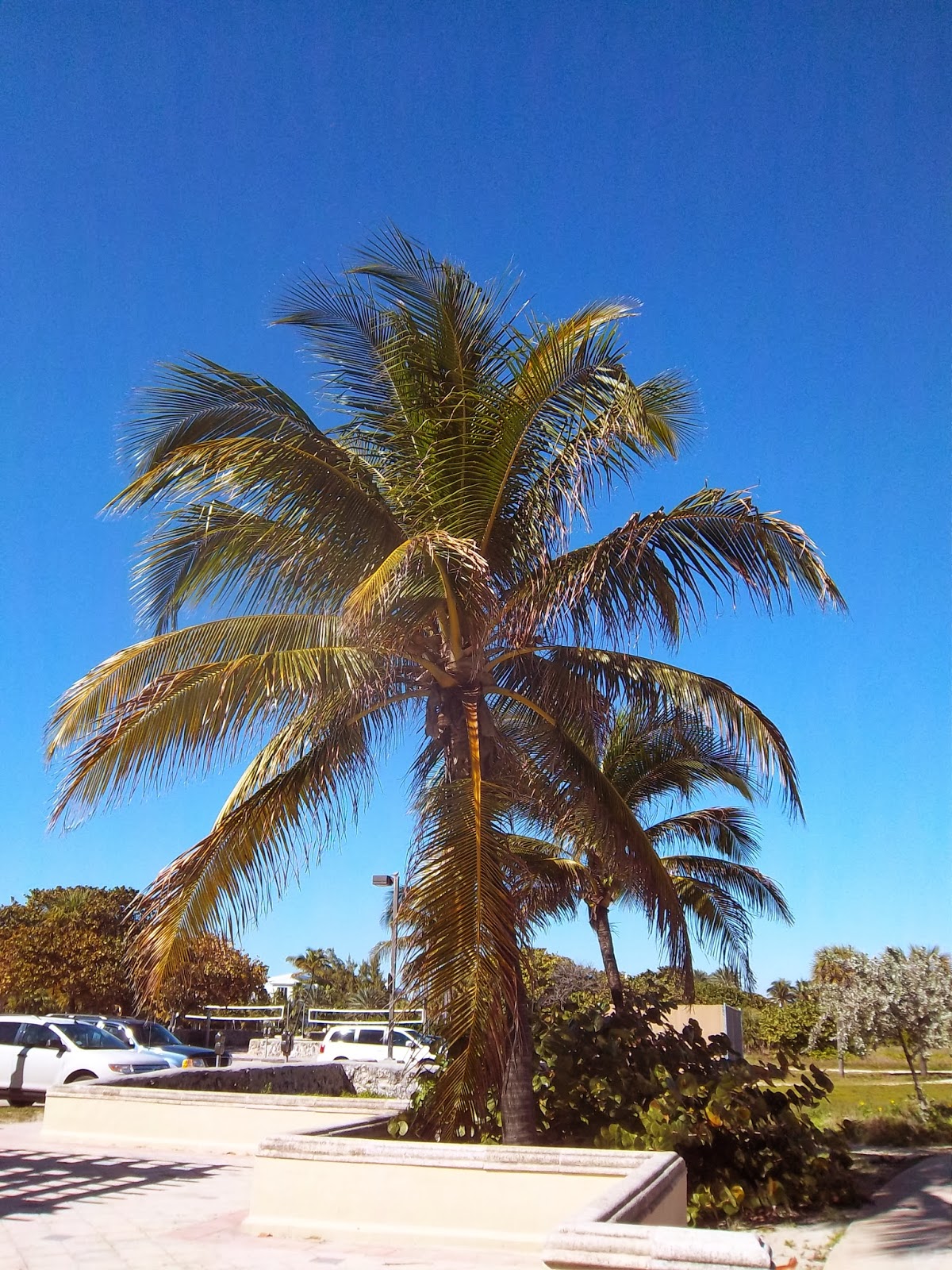
Palm trees are a family of plants. This family is called Arecaceae. Palm trees are not true trees. They grow in hot climates.

Well known palm trees are:
  • Date palm
  • Coconut palm

There are over two thousand kinds, living in many kinds of places from rainforests to deserts.

History

Palms first appear in the fossil record around 80 million years ago, during the late Cretaceous Period. Some kinds from that period are still to be seen today, such as the nipa palm or mangrove palm

The palm as a symbol
 
  •  The palm branch was a symbol of triumph and victory in Roman times. The Romans rewarded champions of the games and celebrated success in war with palm branches.
  • Jews also had a tradition of carrying palm branches during festive times.
  • Early Christians used the palm branch to symbolize the victory of the faithful over enemies of the soul, as in the Palm Sunday festival celebrating the triumphal entry of Jesus into Jerusalem.
  • In Judaism, the palm represents peace and plenty. The palm may also symbolize the Tree of Life in Kabbalah.
  • The Prophet Muhammad is said to have built his home out of palm, and the palm represents rest and hospitality in many cultures of the Middle East.
  • Palm stems represented long life to the Ancient Egyptians, and the god Huh was often shown holding a palm stem in one or both hands.

  • The sacred tree of the Assyrians was a palm that represents the god Ishtar connecting heaven, the crown of the tree, and earth, the base of the trunk. The Mesopotamian goddess Inanna, who had a part in the sacred marriage ritual, was thought of as the one who made the dates abundant 
  • The palm tree was a sacred sign of Apollo in Ancient Greece because he had been born under one .
  • The palm, especially the Coconut, remains a symbol of tropical island paradise  
  • The palm tree also represents Oasis.

 Soil Need

Light and well-drained soils are imperative for healthy palm tree growth. Sand-based soil, like sandy loam, provides the best earth environment for spreading palm roots because palms do not like compacted soils with few air pockets, such as clay. Heavy soils suffocate roots and contribute to growth stunting and root rot.

Water Preferences


If you have just planted your palm tree, its water needs are significantly different than for an established plant. Water new palm twice a week until the first 18 inches of soil are moist. A moisture meter is a useful tool to verify the depth you have saturated. After six months have passed, the palm has a better root structure to find adequate moisture. At this point, watering is only necessary two times each month. A well-established palm has a good level of drought tolerance.

Planting the Desert with Palm Trees

If you are considering planting palms as part of a backyard desert oasis, be aware that there are few palm trees you can grow with confidence in  dry, hot desert -- out of the over 2500+ species of palms around the world. 
 
Mediterranean Fan Palm (Chamaerops humilis) - a multi-trunk palm that grows to about 15 feet. 
Mexican Blue Palm (Brahea Armata) - a slow-growing palm with arching, silvery-blue feather-like fronds. Reaches about 30 feet at maturity.
Guadalupe Fan Palm (Brahea edulis) - similar to the Mexican Blue Palm, this one grows faster to 30 feet in height. The fan-shaped fronds are a light green. Edible fruit.  
Pindo Palm (Butia capitata) - Another short palm, growing only to 20 feet. The gray-green feather-shaped fronds curve downward. Edible fruit. 
Canary Island Date Palm (Phoenix canariensis) -- a giant among palms, grows to 50 feet high with a massive trunk and 10 foot long fronds.  
Date Palm (Phoenix dactylifera) -- more slender than the Canary Island palm, but also grows tall: 60 feet.
Windmill Palm (Trachycarpus fortunei) - a semi-dwarf palm with windmill-shaped fronds. Slow-growing to 15 feet tall. This tree loves our summer heat!
California Fan Palm (Washingtonia filifera) - a native of California, Arizona, and Mexico, this massive palm grows to 50 feet.  
Mexican Fan Palm (Washingtonia robusta) - a palm equivalent of a skyscraper, it grows to 80 feet or more. 
Two other palms worth trying are the Chinese Fountain Palm (Livistona Chinensis ) and the Australian Cabbage Palm (Livistona australis). Both have a "weeping" shape with gracefully drooping fronds. 

About Planting Palms

Palms, unlike other trees, are best planted in late Spring or Summer. They like warm soil for their roots to grow.  Be sure the hole for planting is 2 to 3 times as wide as the root ball.  And water regularly until established.

About Pruning Palms

Only trim off the brown drooping fronds. Do not trim off  ones that are still green -- the tree needs them to collect sunlight to create chlorophyll for growth and best health.  As a rule of thumb, leave a minimum of 7 fronds on the tree.

Medicinal Uses
 
  • The fruit of the date palm contains tannin, which makes it an effective astringent. 
  • The fruit from this tree has been used to treat sore throats, 
  • colds, 
  • bronchial catarrh,
  •  fevers, gonorrhea, 
  • edema and 
  • abdominal problems. 
  • The seeds from the tree have been ground into a paste that is effective in treating ague.
  •  Toothaches have been relieved by date palm roots.  
  • Finally, gum extracted from the trunk of this tree has effectively been used to treat diarrhea and 
  • urinary ailments.
  • Roots of coconut palms are medicinal and can be used to treat dysentery
  • They can also be used as a dye or a mouthwash. 
  • Shredded roots also make a crude toothbrush.